Basilicas in Germany—Baden Wurttemberg and Hesse
Basilica of SS. Marcellinus and Peter, Seligenstadt, Hesse
Declared a minor basilica by Pope Pius XI in 1925.
The Basilica was originally built as a monastery church in the 11th Century. The building has been renovated in various styles over the centuries but is today mostly Romanesque and Baroque. The monastery closed in 1803 and the building became a parish church.


The first picture is from Pinterest and the others are from Wikipedia.
Basilica of the Immaculate Conception, Sts. Peter and Paul, Niddatal-Ilbenstadt, Hesse
Declared a minor basilica by Pope Pius XI in 1928.
The Romanesque and Baroque church was built in the early 12th Century as a chapel for a Premonstratensian monastery. The monastery was dissolved in 1803 and the abbey church became a parish church.


The first two pictures are from Flickr and the other is from Wikipedia.
Basilica Minster of Our Lady of the Nativity and Sts. Pelagius and Conrad, Konstanz, Baden-Wurttemberg
Declared a minor basilica by Pope Pius XII in 1955.
The Basilica was built in the 11th Century and predominately employs both Romanesque and Gothic styles. It served as the Cathedral for the former Diocese of Constance (founded in the late 6th Century) until the Diocese was suppressed in 1821. During the Protestant Reformation, the church served briefly as a Protestant church and the Cathedral’s precious vessels, artwork, vestments and even the carpets were sold. Relics were dumped in the Rhine River. The church was reestablished as a cathedral in the mid-1500s.
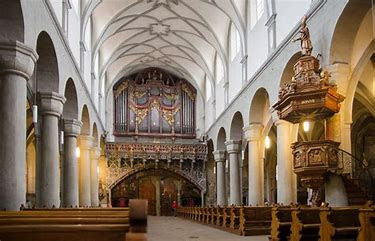


The top three pictures are from local sources and the others are from Wikipedia.
Basilica of St. Martin of Tours and St. Oswald, Weingarten, Baden-Wurttemberg
Declared a minor basilica by Pope Pius XII in 1956.
The Baroque Basilica was built between 1715 and 1724 to replace an 11th Century Romanesque abbey church. It is the largest Baroque church north of the Alps. Several members of the prominent Guelph family are buried in the Basilica’s crypt. The Basilica contains a relic of the Precious Blood of Jesus. Longinus, a Roman soldier, opened Jesus’ side with a lance to make sure he was dead and caught some of Jesus’ blood in a box which was preserved and eventually came to Weingarten. A large equestrian procession takes place every year to honor the Precious Blood.


The top picture is from a local source and the others are from Wikipedia.
Basilica of St. George and the Holy Blood, Walldurn, Baden-Wurttemberg
Declared a minor basilica by Pope John XXIII in 1962.
The Basilica was built between 1698 and 1728 and replaced an earlier church. Walldurn had become a pilgrimage destination since 1330, when a priest while celebrating Mass, accidentally knocked over the chalice containing the Blood of Christ. He was amazed the see that the altar cloth where the Blood was spilled now contained an image of the Crucified Christ. Aside from the altar cloth, the red sandstone church contains several works of art.


All pictures are from Wikipedia.
Basilica of St. Vitus, Ellwangen, Baden-Wurttemberg
Declared a minor basilica by Pope Paul VI in 1964.
Frankish nobles built a church on this site in 764 to house the relics of 16 Roman martyrs. The current Basilica was built probably between 1182 and 1233 in a Romanesque style with Gothic elements. The church was renovated in the 18th Century in a Baroque style.


The first picture is from a local source and the others are from Wikipedia.
Basilica of the Assumption of Our Lady, Uhldingen-Birnau, Baden-Wurttemberg
Declared a minor basilica by Pope Paul VI in 1971.
The Basilica was built in a Rococo style between 1747 and 1740 near the shore of Lake Constance.


The first picture is from Getty, the second from a local source, and the last two from TripAdvisor.
Basilica of St. Martin, Ulm-Wiblingen, Baden-Wurttemberg
Declared a minor basilica by Pope John Paul II in 1993.
Wurttemberg Abbey was established in 1093 as a Benedictine monastery. It closed in 1806. From earliest times, the Abbey had a cross that contained fragments of the True Cross of Christ. The current Basilica was once the Abbey church and today contains the True Cross relics. The Neo-Classic and Baroque church was built in the late 18th Century.


The first picture is from a local source and the rest are from Wikipedia.
Basilica of St. Peter, Fritzlar, Hesse
Declared a minor basilica by Pope John Paul II in 2004.
The Basilica was originally built in the late 11th and early 12th centuries but has been renovated and restored over time in both Romanesque and Gothic styles. St. Boniface built a church near here in 723, but it no longer exists. The current church also once served as a Cathedral for a diocese that no longer exists.


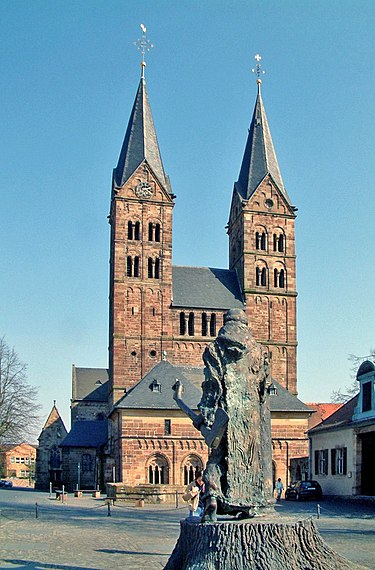
Pictures are from Flickr, a local source, and Wikipedia.
Basilica of SS. Dionysius and Valentinus, Kiedrich im Rheingau, Hesse
Declared a minor basilica by Pope Benedict XVI in 2010.
The Gothic basilica was built near the end of the 15th Century and has long been a pilgrimage destination for those with epilepsy as St. Valentine is the patron saint of those suffering from the disease. The church has unique carved stalls for to better accommodate epileptics. The pipe organ dates to around 1500 and is the oldest in Hesse. The boys’ choir dates to at least 1333 and girls have been allowed to join the choir since the early 1980s.


All pictures are from Wikipedia.
Basilica of St. George, Ochsenhausen, Baden-Wurttemberg
Declared a minor basilica by Pope Francis in 2019.
Ochsenhausen Abbey was a Benedictine monastery that may date to the 9th Century, but certainly to the 10th Century. It closed in 1803. The Gothic abbey church was built in the late 15th Century and is now the parish church of St. George—the current basilica. The church was renovated in the early 18th Century in a Baroque style. One of the ten side altars was built using the Rococo style. Between 1727 and 1729, a German artist painted the 32 ceiling frescoes.


The first picture is from a local source and the others are from Wikipedia.
Basilica of St. Mary and Mark, Reichenau-Mittelzell (Baden-Wurremberg)
Declared a minor basilica by Pope Francis in 2024.
This church is located on the island of Reichenau in Lake Constance. A Benedictine abbey was established here in 724 with a small wooden church. This church was replaced in the 9th Century and has been renovated and enlarged several times. Today’s church is Romanesque. The church has a relic of the Precious Blood and of St. Mark. It also has many medieval artifacts.


Pictures with sources
