Friday, May 19, 2023

Basilicas in France—Brittany

Cathedral Basilica of St. Corentin, Quimper, Finistere

Declared a minor basilica by Pope Pius IX in 1870.

The Basilica is the cathedral for the Diocese of Quimper and Leon.  St. Corentin was the diocese’s first bishop.  The Gothic church was built between the 13th and 15th Centuries.  Additional work and restoration were performed in the 19th Century.


The first picture is from TripAdvisor and the others from Wikipedia.


Basilica of St. Ann, Sainte-Anne-d’Auray, Morbihan

Declared a minor basilica by Pope Pius IX in 1874.

A chapel dedicated to St. Ann has been in this village since early times but was destroyed in the 7th Century.  St. Ann appeared to a local farmer in the early 17th Century commanding him to rebuild the chapel.  Many witnessed these apparitions, and the chapel was rebuilt.  The current Neo- Gothic Basilica was built between 1865 and 1872.


Pictures are from Sygic and Wikepedia.


Cathedral Basilica of St. Stephen, Saint-Brieuc, Cotes-d’Armor

Declared a minor basilica by Pope Pius IX in 1875.

The church is the cathedral for the Diocese of Saint-Brieuc-Treguier.  Brieuc came from Wales and became the first bishop for the Diocese in the 6th Century.  The current cathedral was constructed from 1180 until the mid-15th Century, often interrupted by wars and natural disasters.  Additional work was done in the 19th Century.


Pictures are from Wikipedia.


Cathedral Basilica of St. Peter, Vannes, Morbihan

Declared a minor basilica by Pope Leo XIII in 1886.

The Basilica is the cathedral church of the Diocese of Vannes.  The Gothic church was built from the 15th to the 19th Centuries to replace an 11th Century Romanesque church.  The 13th Century bell tower remains from the previous church.  St. Vincent Ferrer is buried in the Basilica.


Pictures are from Wikipedia.


Basilica of Our Lady of the Bramble, Josselin, Morbihan

Declared a minor basilica by Pope Leo XIII in 1891.

The 15th Century Gothic church was built to house a statue of the Virgin Mary found in 808 by a local farmer in a bramble bush.  The church is a stopover on the road to Compostela, Spain.


The first picture is from Getty and the other two are from Wikipedia.


Basilica of Our Lady of Good Help, Guingamp, Cotes-d’Armor

Declared a minor basilica by Pope Leo XIII in 1899.

The church was built from the 12th Century to the 16th Century although restorations have taken place in almost every century.  It has long been a place of pilgrimage to venerate the Virgin Mary.


All pictures are from Wikipedia.


Basilica of St. Paul Aurelian, Saint-Pol-de-Leon, Finistere

Declared a minor basilica by Pope Leo XIII in 1901.

The Basilica was once the cathedral for a diocese that existed from the 6th Century until 1801.  The church is named for the diocese’s first bishop.  The 13th Century limestone church replaced a 6th Century Romanesque church.  The existing church was completed in the 16th Century.  The church has 22 altars and the tomb of Marie-Amice Picard, a 17th Century mystic.


All pictures are from Wikipedia.


Basilica of Our Lady of Hope, Saint-Brieuc, Cotes-d’Armor

Declared a minor basilica by Pope Leo XIII in 1902.

The Gothic Basilica was constructed between 1856 and 1877.


The first picture is from a local source and the second is from Wikipedia.


Basilica of Our Lady of Paradise, Hennebont, Morbihan

Declared a minor basilica by Pope Pius X in 1912.

The Gothic church was built in the 16th Century.  Much of Hennebont was destroyed by German bombing in 1944, but the church received little damage.


All pictures are from Wikipedia.


Basilica of the Holy Savior and Our Lady of Miracles and Virtues, Rennes, Ille-et-Vilaine

Declared a minor basilica by Pope Benedict XV in 1916.

The church was built in the 18th Century in a Classical style.  A church has been on this site since the 12th Century and miracles have been attributed to our Lady’s intercession.


All pictures are from Wikipedia.


Basilica of St. Aubin and Our Lady of Good News, Rennes, Ille-et-Vilaine

Declared a minor basilica by Pope Benedict XV in 1916.

The Gothic-Revival Basilica was built between 1884 and 1904 to replace an older church that was torn down.  The church has long attracted pilgrims due to a 15th Century painting of the Mother and Child.  This was the parish church of Blessed Marcel Callo, killed by the Nazis during the Second World War for his Catholic beliefs.


All pictures are from Wikipedia.


Basilica of Our Lady of Deliverance, Quintin, Cotes-d’Armor

Declared a minor basilica by Pope Pius XI in 1933.

The basilica was built between 1879 and 1887 in a Gothic style.  The Basilica has a portion of a belt believed to have been worn by the Blessed Virgin.  It was brought here by a local lord in 1252 after the Seventh Crusade.


All pictures are from Wikipedia.


Basilica of St. Tudwal, Treguier, Cotes’d’Armor

Declared a minor basilica by Pope Pius XII in 1947.

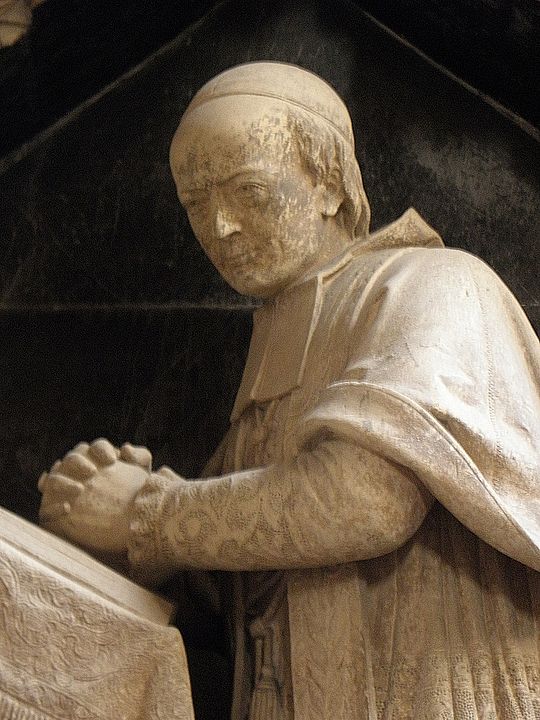
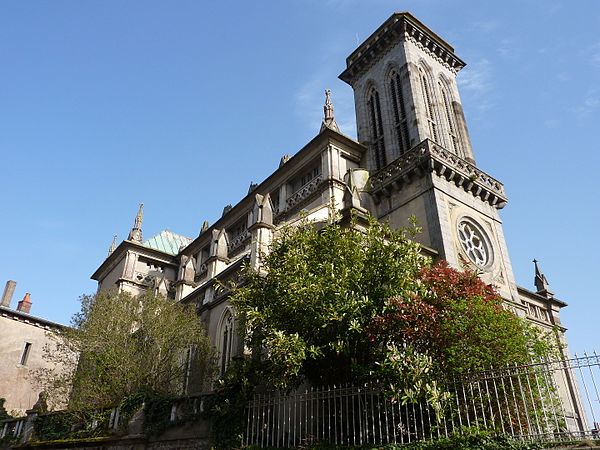
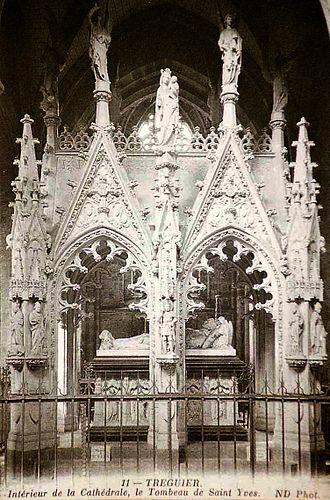
The Gothic church was built between the 14th and 18th Centuries to replace a 10th Century Romanesque church.  The church was the cathedral for the former Diocese of Treguier which existed between 950 and 1801.  St. Tudwal was a missionary bishop in the area from Wales.  The Basilica is the burial site of St. Ives, a 13th Century priest and the patron saint of Brittany. 


All pictures are from Wikipedia.


Basilica of Our Lady of the Assumption, La Guerche-de-Bretagne, Ille-et-Vilaine

Declared a minor basilica by Pope Pius XII in 1951.

A Gothic church was built between the 13th and 16th Centuries and enlarged in the 19th Century.  Devotion to Our Lady at this location dates to the 10th Century—the current statue dates to the 17th Century.


All pictures are from Wikipedia.


Basilica of the Holy Savior, Dinan, Cotes-d’Armor

Declared a minor basilica by Pope Pius XII in 1953.

A Romanesque church was built on this site in the early 12th Century and greatly expanded in the 15th Century in a Gothic style.  Pilgrims have come to the church since the 15th Century because of a sculpture of the Assumption of the Virgin Mary.


All pictures are from Wikipedia.


Basilica of Our Lady of Joy, Pontivy, Morbihan

Declared a minor basilica by Pope John XXIII in 1959.

The granite church was built in the 16th Century.  The main altar and pulpit are designed in a Louis XV style.


All pictures are from Wikipedia.


Basilica of Our Lady, Le Folgoet, Finistere

Declared a minor basilica—see text.

The Gothic church was built between 1365 and 1423.  Legend has it that Pope Martin V designated the church a minor basilica in 1427, but there is no record of this.


The first picture is from Flickr and the others are from Wikipedia.


Thursday, May 18, 2023

Pioneer Bishops of New Jersey

This blog will discuss bishops that served in New Jersey up to 1900.  For more information about New Jersey, see my blog of May 20, 2017.

The first Catholics to settle in New Jersey came to Elizabeth and Woodbridge (both near New York City) in 1672 and the first Mass in New Jersey was celebrated in Woodbridge in that year.  Since New Jersey was an English colony, Catholics were often persecuted.  William Douglass was elected to the General Assembly in 1668 but was barred from attending the Assembly because he was Catholic.  Father John Ury, who ministered to Catholics in New Jersey, was arrested on false charges and executed in New York City in 1741.  With the establishment of St. Joseph’s Church in Philadelphia in 1733—at the time the only Catholic church in Pennsylvania, New Jersey, and New York—Jesuit priests (such as Theodore Schneider and Ferdinand Farmer) began ministering to the few Catholics scattered throughout the colony.  More Catholics came to New Jersey to work at the glass factories in Salem (South Jersey) and iron furnaces in Ringwood (North Jersey) and Pleasant Mills (South Jersey), among other locations.

In 1808, northern New Jersey became part of the Diocese of New York and southern New Jersey part of the Diocese of Philadelphia.  The first parishes in New Jersey were at West Milford (1765) and Trenton (1814).  As more immigrants came to New Jersey, additional parishes were opened including those in Paterson (1820), Newark (1826), and Pleasant Mills (1830). 

Pope Pius IX created the Diocese of Newark in 1853, which consisted of all of New Jersey.  At that time, there were about 40,000 Catholics in New Jersey, in 33 parishes, served by about 30 priests.  Pope Leo XIII created the Diocese of Trenton in 1881 to serve Catholics in central and southern New Jersey.  By this time, the number of Catholics in New Jersey had grown to 190,000.  Continued immigration of Catholics from Ireland, Italy, Germany, Poland, and elsewhere had increased the Catholic population to over one million and led Pope Pius XI in 1937 to create the Province of Newark, making Newark an archdiocese, and to establish the new Dioceses of Camden and Paterson.  Pope John Paul II established the Diocese of Metuchen in 1981.

James Roosevelt Bayley was born in New York City in 1814 and raised as an Episcopalian and became an Episcopal priest in 1839.  He was the nephew of St. Elizabeth Ann Bayley Seton and a relative of two future presidents (Theodore Roosevelt and Franklin Roosevelt).  Influenced by the Oxford Movement and by reading the early church fathers, and by his acquaintance with Father John McCloskey (later Archbishop of New York and the first U.S. cardinal) Bayley converted to Catholicism in 1842 and was ordained a priest for the Catholic Diocese of New York in 1844.  His ordination resulted in his disinheriting a large fortune from his grandfather.  As a priest, he served as vice president and professor at St. John’s College and served as a pastor at a church on Long Island.

Bayley was appointed the first Bishop of Newark, New Jersey, in 1853.  The Diocese of Newark, which at that time consisted of the State of New Jersey, had about 30,000 Catholics—mostly poor Irish and Germans—served by 30 churches and 30 priests.  Bayley invited religious orders to work in the Diocese including the Benedictines, the Sisters of Charity, and the Jesuits.  He also established Seton Hall University and helped found the North American College in Rome.  He wrote several books on U.S. church history and stressed the importance of Catholic education—by 1872 there were 20,000 students in Catholic schools in New Jersey.  Bayley was named Archbishop of Baltimore in 1872.  Never in good health, Bayley died in 1877.

Michael A. Corrigan was born in Newark, New Jersey, in 1839.  He was the fifth of nine children of Irish immigrant parents.  His father was a successful owner of a grocery and liquor business.   Corrigan received a good education and was a member of the first class at the North American College in Rome.  He was ordained to the priesthood in 1863 for the Diocese of Newark.  Corrigan served as a professor of theology and history at Seton Hall College and also served as a pastor.  He was named president of Seton Hall in 1869 and also became vicar general for the Diocese.

Corrigan was appointed Bishop of Newark in 1873, which at the time encompassed the State of New Jersey.  He was only 34, and the youngest bishop in the United States, at the time of his appointment.  He built many hospitals and charitable institutions, and he established Catholic reform schools because the State reform schools forced their Catholic inmates to attend Protestant services.  Corrigan also focused on the needs of Italian and German immigrants.  He also supported the Catholic Temperance Union and the Catholic Union—a lay group that defended Catholics against bigotry.  He was named coadjutor archbishop of New York in 1880 and became Archbishop of New York in 1885.  Corrigan died in 1902 of pneumonia.

Winand M. Wigger was born in New York City in 1841.  He was the second of four sons of parents born in Germany.  Sickly as a child, his parents returned to Germany in 1843 hoping the sea voyage would help young Winand.  They returned to New York in 1845 and his father became prosperous.  Wigger applied for seminary in New York but was rejected because of his health.  He was accepted at Newark’s seminary and later studied in Italy, before being ordained a priest for the Diocese of Newark in Italy in 1865.  On his return voyage in 1866, cholera broke out among the ship’s passengers and Wigger stayed on board for two weeks after the ship arrived in New York to care for the sick and dying.  Wigger served at several parishes in New Jersey and was noted for his financial abilities, as well as his generosity and concern for the poor and suffering.  He was appointed the third Bishop of Newark in 1881.

Bishop Wigger spoke English, German, French, and Italian.  He established German parishes and schools to allow German immigrants to better maintain their Faith, and also worked with Italian immigrants.  He was a strong supporter of Catholic schools and unsuccessfully sought state funding for them, but he opposed a plan to incorporate parochial schools into the public school system.  He also started construction for the Cathedral of the Sacred Heart in 1889.  Bishop Wigger was concerned about alcohol abuse, which met with skepticism from German brewers and Irish saloon keepers.  Despite the creation of the Diocese of Trenton (southern New Jersey), the number of Catholics increased during his time as Bishop from 145,000 to 300,000, and the number of priests and parishes doubled as well.  Bishop Wigger died in 1901.

Michael J. O'Farrell was born in Ireland in 1832 and educated in Dublin and Paris.  He was ordained a priest in 1855, joined the Sulpicians, and served as a pastor of a parish in Montreal.  He eventually became a priest for the Diocese of New York and served in parishes there until 1881 when he was named the first bishop of Trenton.  Bishop O’Farrell took charge of a Diocese with 40,000 Catholics, about 70 churches, and 51 priests.  He built many new parishes and charitable institutions, including an orphanage and home for the aged, despite hostility by non-Catholics in South Jersey.  O’Farrell was noted for being an eloquent speaker and gifted writer.  He died in 1894.

James A. McFaul was born in Ireland in 1850 and came with his family as an infant, first to New York City and then to New Jersey.  His father was a farmer and McFaul became a store clerk at age 15.  He studied in Pennsylvania, New York, and New Jersey, initially intending to become an attorney before deciding on the priesthood.  He was ordained a priest for the Diocese of Newark in 1877.  He served in Newark until being transferred to a parish in Trenton in 1879.  When Trenton became a Diocese in 1881, McFaul became a priest for the new Diocese.  He soon became private secretary to Bishop O’Farrell, then chancellor for the Diocese, and eventually vicar general.  He was named Bishop of Trenton in 1894.

Bishop McFaul was noted for his speaking and writing abilities.  He gave a speech in 1909 that accused some university professors of teaching their students information that was in conflict with accepted moral standards.  He was one of the founders of the American Federation of Catholic Societies.  The Catholic population of the Diocese had grown to almost three quarters of a million by the time of his death—due to immigration from Italy and Eastern Europe.  As a result, he built many new churches and schools—including a college in Plainfield—and established several Catholic service institutions while maintaining the Diocese’s solid financial standing.  He died in 1917.

Friday, May 12, 2023

Pioneer Bishops of New Hampshire

This blog will discuss bishops that served in New Hampshire up to 1900.  For more information about New Hampshire, see my blog of September 27, 2017.

Martin Pring, an English explorer, came to the mouth of the Piscataqua River in 1603, and likely was the first European to see New Hampshire.  The first settlement was near Rye in 1623.  Much of New Hampshire’s early history was one of conflict.  Many of the early settlements were by Anglicans, which drew the attention of the Massachusetts Puritans.  Massachusetts officials sought to control New Hampshire until England made New Hampshire a separate colony in 1679.  Border disputes with Massachusetts continued well into the 18th Century.  Both Protestant groups fought the Native Americans and both detested Catholics.  Colonial laws outlawed any practice of the Faith.  Some of these anti-Catholic laws were not repealed until well after the Revolution.  Catholics were not allowed to hold state office until 1877 and another anti-Catholic provision of the state constitution was not removed until 1968.  New Hampshire became the 9th State in 1788.

There was some Catholic presence in colonial New Hampshire.  Some Native Americans were converted by French missionaries, but most eventually moved to Canada.  The first Mass was celebrated by French Jesuits in 1694 near Durham during a French raid on settlements there.  But given the hostility toward Catholics, it is not surprising that few settled in New Hampshire.  The first parish, St. Mary’s, was established in Claremont in 1823, and the second, in Dover, in 1833—at which time there were fewer than 400 Catholics in the State.  French Canadians began coming to New Hampshire in the 1830s and Irish immigrants came in the 1840s.  Manchester had a few hundred Catholics when St. Anne’s Church—New Hampshire’s third—was established by Father William McDonald in 1848.

The new French and Irish Catholics brought about a need for more parishes and more than two dozen were opened between 1850 and 1884.  In that year, Pope Leo XIII created the Diocese of Manchester to serve New Hampshire’s 45,000 Catholics.  Manchester had become New Hampshire’s largest city in 1880. 

Denis M. Bradley was born in Ireland in 1846 and came to Manchester, New Hampshire, in 1854, with his siblings and widowed mother.  He graduated from Holy Cross College in Massachusetts in 1867 and attended seminary in Troy, New York.  He was ordained a priest for the Diocese of Portland, Maine, in 1871.  He initially served at the cathedral in Portland and served as chancellor for the Diocese, but took a six-month sabbatical in Europe in 1879 to regain his health.  Still in poor health upon his return, the Bishop of Portland, whose Diocese then included New Hampshire, sent Bradley to the less demanding job of pastor of St. Joseph’s parish in Manchester.  Bradley was appointed the first Bishop of Manchester in 1884 and selected St. Joseph’s to be his cathedral.

The number of Catholics increased from 45,000 to 104,000 during his time as bishop, and he increased the number of priests from 37 to 107 to minister to the larger population.  He built many schools and charitable institutions and focused on the needs of rural Catholics.  He also encouraged the Benedictines to establish an abbey and St. Anselm College.  He died in 1903 of chronic gastritis.


Wednesday, May 3, 2023

Pioneer Bishops of Nevada

The hierarchy was not established in Nevada until 1931.  For more information about Nevada, see my blog of May 4, 2018.

A Franciscan priest, Francisco Graces, was the first European to see Nevada, when he traveled from Mexico to California in 1775 and celebrated the first Mass near what is now Laughlin.  Other Franciscans passed through the next year and were followed in subsequent years by fur trappers and later by gold miners going to California, but even as late as 1860, there were fewer than 7,000 residents.  Nevada became part of the United States in 1848 and most of Nevada became part of the Utah Territory in 1850.  Greater attention was focused on Nevada after the discovery of the Comstock Lode silver mine in 1859.  Nevada became a separate territory in 1861 and the 36th State in 1864.

For the rest of the 19th Century, Nevada’s population fluctuated greatly, depending on the economics of the mining industry.  By 1880, the population was 62,000.  The population dropped to 42,000 in 1900 before rebounding to 82,000 in 1910.  The first Catholic parish was established in Douglas County in 1858 and by 1875 there were more than half a dozen parishes in Nevada.  Nevada was for many years divided between the Dioceses of Sacramento and Salt Lake.

Pope Pius XI created the Diocese of Reno in 1931, which included all of the State of Nevada.  Reno was the largest city in Nevada at that time, with about 19,000 people.  There were about 8,500 Nevada Catholics then—about 9 percent of the total population.  Nevada was the 48th state to have its own diocese.  The name of the Diocese was changed in 1976 to the Diocese of Reno-Las Vegas.  Pope John Paul II split Nevada into the Diocese of Reno and the newly created Diocese of Las Vegas in 1995.