Saturday, February 1, 2020

Mexico—2


This blog will cover seven ecclesiastical provinces in central Mexico.

Province of Mexico City


The province consists of the Federal District and part of the State of Mexico.  The Diocese of Mexico City was created in 1530 and became the Metropolitan Archdiocese of Mexico City in 1546.

The Cathedral of the Assumption in Mexico City was built between 1573 and 1813 on the site of a Mayan temple and in a mixture of styles—Renaissance, Baroque, and Neo-classical.  The Cathedral has two bell towers containing a total of 25 bells, the largest weighing 15 tons.  The Cathedral covers more than 64,000 square feet, not counting a separate building for the Tabernacle.  There are sixteen chapels, each assigned to a religious organization, and each dedicated to a saint.  One of the chapels contains the tomb of the Venerable Antonio Margil (1657-1726), a Spanish Franciscan priest, who evangelized in Mexico, Guatemala, Costa Rica, and Texas.  The Cathedral has two large 18th Century pipe organs.  See catedralmetropolitanademexico.mx.


The first seven pictures are from the cathedral website, the eighth picture is from Flickr, and the others are from Wikipedia.

The Province has three suffragan dioceses.
  • The Diocese of Azcapotzalco was established in 2019.
  • The Diocese of Iztapalapa was established in 2019.
  • The Diocese of Xochimilco was established in 2019.

Province of Guadalajara


The province consists of the States of Jalisco, Aguascalientes, Colima, and Nayarit.  The Diocese of Guadalajara was established in 1548 and was promoted to a metropolitan archdiocese in 1863.

The Cathedral Basilica of the Assumption in Guadalajara was built between 1561 and 1618.  It covers over 60,000 square feet and has been damaged by earthquakes more than half a dozen times.  The Cathedral has Gothic twin yellow towers and a neo-Gothic façade.  The main altar is made of marble and silver and the Stations of the Cross were imported from France.  The Cathedral features an ivory statue of Christ, oil paintings by Mexican artists, and a sculpture of the Virgin Mary donated by Emperor Charles V.  The French pipe organ is the second largest in Mexico.  Pope Pius XI designated the Cathedral as a minor basilica in 1938.


The first two pictures are from Expedia, the third from Pinterest, and the last two from Wikipedia.

The Province has seven suffragan jurisdictions.
  • The Diocese of Colima was created in 1881.
  • The Diocese of Tepic was created in 1891.
  • The Diocese of Aguascalientes was created in 1899.
  • The Diocese of Autlan was created in 1961.
  • The Diocese of San Juan de los Lagos was created in 1972.
  • The Diocese of Ciudad Guzman was created in 1972.
  • The Territorial Prelature of Jesus Maria (del Nayar) was created in 1962.

Province of Morelia


The province consists of the State of Michoacan.  The Diocese of Michoacan was created in 1536 and became a metropolitan archdiocese in 1863.  It became the Metropolitan Archdiocese of Morelia in 1924.

The Cathedral of the Divine Savior in Morelia was built between 1660 and 1744 using pink stone in both baroque and neoclassical styles.  The two bell towers are over 200 feet tall and the German pipe organ has 4,600 pipes.  A crucifix is made of pasta de cana (a paste made from the heart of the cornstalk) and has a gold crown donated by a Spanish king.  Some consider this Cathedral to be the most beautiful Mexican cathedral.


The first two pictures are from Wikipedia and the third is from Flickr.

The Province has four suffragan dioceses.
  • The Diocese of Zamora was established in 1863.
  • The Diocese of Tacambaro was created in 1913.
  • The Diocese of Apatzingan was created in 1962.
  • The Diocese of Ciudad Lazaro Cardenas was established in 1985.

Province of Tlalnepantla


The province consists of most of the State of Mexico.  The Diocese of Tlalnepantla was created in 1964 and became a metropolitan archdiocese in 1989.  Corpus Christi Cathedral in Tlalnepantla was originally built in the 16th Century, but has been renovated due to 17th Century fire and a 20th Century earthquake.  See tierradeenmedio.org.mx/arquidiocesis/cathedral.


All pictures are from Wikipedia.

The Province has seven suffragan dioceses.
  • The Diocese of Texcoco was created in 1960.
  • The Diocese of Cuautitlan was created in 1979.
  • The Diocese of Netzahualcoyotl was created in 1979.
  • The Diocese of Ecatepec was created in 1995.
  • The Diocese of Valle de Chalco was created in 2003.
  • The Diocese of Teotihuacan was created in 2008.
  • The Diocese of Izcalli was created in 2014.

Province of Leon


The province consists of the States of Guanajuato and Queretaro.  The Diocese of Leon was created in 1863 and became the Metropolitan Archdiocese of Leon in 2006.

Construction of the Cathedral Basilica of Our Lady of the Light in Leon was begun in 1764 by Jesuits, but was stopped when the Jesuits were expelled from Mexico in 1767.  Construction was resumed after the Diocese was created in 1863 and was completed in 1866.  Pope Benedict XV designated the cathedral as a minor basilica in 1920.


Both pictures are from Wikipedia.

The Province has three suffragan dioceses.
  • The Diocese of Queretaro was established in 1863.
  • The Diocese of Celaya was established in 1973.
  • The Diocese of Irapuato was established in 2004.

Province of Tulancingo


The province consists of the State of Hidalgo.  The Diocese of Tulancingo was established in 1863 and was promoted to a Metropolitan archdiocese in 2006.

The Cathedral of St. John the Baptist in Tulancingo was built by the Franciscans beginning in 1528 in a colonial style.  Later renovations were done in a neoclassical style.


The first picture is from Pinterest and the other two are from Wikipedia.

The Province has two suffragan dioceses.
  • The Diocese of Huejutla was created in 1922.
  • The Diocese of Tula was created in 1961.

Province of Toluca


The province consists of the State of Morelos and part of the State of Mexico.  The Diocese of Toluca was created in 1950 and it became the Metropolitan Archdiocese of Toluca in 2019.

Construction of the Cathedral of St. Joseph of Nazareth in Toluca began in 1867 but was not completed until the second half of the 20th Century.  The Neoclassical façade has statues of Saints John, Thomas, Peter, and James.  The Cathedral also has a relief depicting the Ascension of Jesus.


Pictures are from Expedia, Pinterest, and Wikipedia.

The Province has three suffragan dioceses.
  • The Diocese of Cuernavaca was established in 1891.
  • The Diocese of Atlacomulco was created in 1984.
  • The Diocese of Tenancingo was created in 2009.

Definitions


The Catholic Church is mostly divided into ecclesiastical provinces—a province consists of a metropolitan archdiocese and one or more dioceses.  The province and the archdiocese are led by an archbishop.  Each of the dioceses is called a suffragan diocese and is led by a bishop.  Archbishops have some responsibilities for the province, but all bishops answer directly to the Pope.  There are also jurisdictions below the level of a diocese.  These include territorial prelatures which are missionary dioceses.

A basilica is an honorary title bestowed on a church by the Pope because of the church’s antiquity, dignity, historical importance, or significance as a center of worship.  Some cathedrals are also basilicas.  Each basilica has a ceremonial umbrella in the papal colors of white and yellow and a ceremonial bell.  Both of these are symbolic of the Pope’s special relationship to the basilica.

Monday, January 27, 2020

Mexico—1


The Spanish conquered Mexico between 1517 and 1521 and over the next dozen years Franciscans, Dominicans, and Augustinians brought the Catholic Faith to the Mexican people.  The Diocese of Mexico City was established in 1530.  Our Lady of Guadalupe appeared to Juan Diego in 1531.
It was a Catholic priest, Manuel Hidalgo, who called for Mexican independence in 1810.  The independence movement was quickly put down by the colonial government and Hidalgo was killed in 1811.  Mexico was able to achieve independence in 1821, but a civil war began in 1858 that led the French to take control of Mexico in 1861.  The French withdrew in 1867.

The Mexican Revolution began in 1910 and would last for two over decades.  During the first decade alone, 900,000 Mexicans went to the United States to escape the violence.  The Revolution also had a profound change on the Church.  The 1917 Mexican Constitution put severe limits on the Church and many viewed it as anti-clerical.  Between 1926 and 1934, Mexican anti-clericalism turned violent.  More than 40 priests were killed and over 90 percent of priests fled Mexico, many to the United States.  It was not until 1992 that most of the severe restrictions on the Church were removed.
Mexico has 126 million people and 83 percent are Catholic.  About 9 percent are Protestant.  It needs to be noted that Church alignment with the government during Colonial times created hostility, especially among the poor, that remains an issue.

Mexico has 19 ecclesiastical provinces.  In addition, there is a Greek-Melkite diocese that was established in 1988.  It serves 5,000 Greek-Melkite Catholics and is immediately subject to the Greek-Melkite Patriarch.  A Maronite Catholic diocese serves 160,000 Maronite Catholics.  It was established in 1995 and is immediately subject to the Maronite Patriarch.  An Armenian apostolic exarchy was established in 1981 to serve 12,000 Armenian Catholics.  It is immediately subject to the Pope.

This blog will cover six ecclesiastical provinces in northern Mexico.

Province of Durango


The province consists of the State of Durango and parts of Coahuila and Sinaloa.  The Diocese of Durango was created in 1620 and became a metropolitan archdiocese in 1891.

The Cathedral Basilica of Our Lady of Durango (Immaculate Conception) was built primarily between 1695 and 1713.  The façade is fashioned in a Baroque style and the doors are made in a Spanish baroque style.  Inside there is a marble statue of the Immaculate Conception.  The Cathedral was designated a minor basilica by Pope Pius XII in 1957.


Pictures are from Pinterest, TripAdvisor, and Wikipedia.

The Province has four suffragan jurisdictions.

• The Diocese of Torreon was established in1957.
• The Diocese of Mazatlán was established in 1958.
• The Diocese of Gomez Palacio was established in 2008.
• The Territorial Prelature of El Salto was established in 1968.

Province of Monterrey


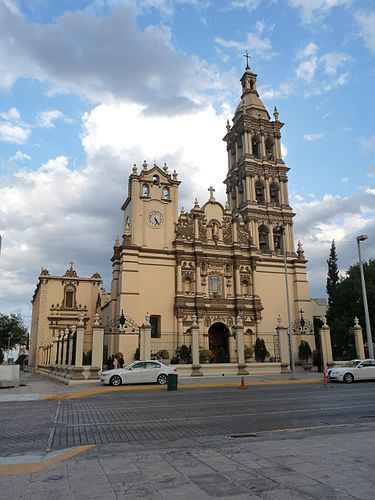
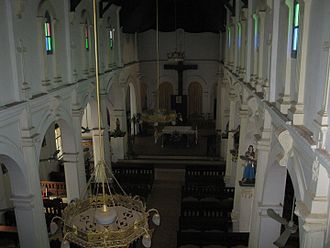
The province consists of the States of Nuevo Leon, Coahuila, and Tamaulipas.  The Diocese of Linares was established in 1777 and became a metropolitan archdiocese in 1891.  It was renamed the Metropolitan Archdiocese of Monterrey in 1922.  The Cathedral of Our Lady of Monterrey in Monterrey was built between 1705 and 1791 using neoclassical and baroque styles.


Pictures are from Wikipedia.

The Province has seven suffragan dioceses.

• The Diocese of Tampico began as an apostolic vicariate in 1861 and became a diocese in 1870.  It acquired its current name in 1958.
• The Diocese of Saltillo was established in 1891.
• The Diocese of Matamoros was created in 1958 and became the Diocese of Metamoros-Reynosa in 2024.
• The Diocese of Linares was established in 1962.
• The Diocese of Ciudad Victoria was created in 1964.
• The Diocese of Nuevo Laredo was established in 1989.
• The Diocese of Piedras Negras was created in 2003.

Province of Chihuahua


The province consists of the State of Chihuahua.  The Diocese of Chihuahua was established in 1891 and was promoted to a metropolitan archdiocese in 1958.

The Cathedral of the Holy Cross in Chihuahua was built between 1725 and 1826 and is considered one of the finest examples of colonial architecture in Mexico.  It was built in the Spanish Baroque style and its façade has an octagonal window made in Germany.  The Cathedral’s pipe organ was made by Hook and Hastings in 1885 and rebuilt by E.F. Walcker in 1960.  The Cathedral contains the tomb of St. Peter of Jesus Maldonado, a priest and martyr canonized in 2000.


Pictures are from Wikipedia.

The Province has five suffragan dioceses.

• The Diocese of Ciudad Juarez was created in 1957.
• The Diocese of Parral was created in 1992.
• The Diocese of Tarahumara was created as a mission sui juris in 1950, became an apostolic vicariate in 1958, and a diocese in 1993.
• The Diocese of Cuauhtemoc-Madera was created as a territorial prelature in 1966 before being promoted to a diocese in 1995.
• The Diocese of Nuevo Casas Grandes was created as a territorial prelature in 1977 before becoming a diocese in 2000.

Province of Hermosillo


The province consists of the States of Sonora and part of Sinaloa.  The Diocese of Sonora was created in 1779 and renamed Hermosillo in 1959.  It became the Metropolitan Archdiocese of Hermosillo in 1963.

The Cathedral of the Assumption in Hermosillo was built between 1887 and 1908, although the dome was not completed until 1963.  It was built with a cream-colored stone combining Baroque and Gothic styles.


Pictures are from Pinterest, TripAdvisor, and Wikipedia.

The Province has three suffragan dioceses.

• The Diocese of Culiacan was established in 1883 and acquired its current name in 1959.
• The Diocese of Ciudad Obregon was created in 1959.
• The Diocese of Nogales was created in 2015.

Province of San Luis Potosi


The province consists of the States of San Luis Potosi and Zacatecas.  The Diocese of San Luis Potosi was created in 1854 and became a metropolitan archdiocese in 1988.  The Cathedral of St. Louis the King in San Luis Potosi was built between 1670 and 1730 using pink stone.  It has two towers and a baroque façade with 24 statues of the Apostles.


The first picture is from Expedia and the other two are from Wikipedia.

The Province has three suffragan jurisdictions.

• The Diocese of Zacatecas was created in 1863.
• The Diocese of Ciudad Valles was created in 1960.
• The Diocese of Matehuala was created in 1997.

Province of Tijuana


The province consists of the State of Baja California.  The Apostolic Vicariate of California Inferiore was established in 1874.  This became the Diocese of Tijuana in 1963 and the Metropolitan Archdiocese of Tijuana in 2006.

The Cathedral of Our Lady of Guadalupe is in downtown Tijuana and may be replaced in the future with a new building in a different location.  See iglesiatijuana.org.


Picture from TripAdvisor.

The Province has three suffragan dioceses.

• The Diocese of Mexicali was created in 1966.
• The Diocese of La Paz began as an apostolic prefecture in 1957, became an apostolic vicariate in 1976, before being promoted to a diocese in 1988.
• The Diocese of Ensenada was created in 2007.

Definitions


The Catholic Church is mostly divided into ecclesiastical provinces—a province consists of a metropolitan archdiocese and one or more dioceses.  The province and the archdiocese are led by an archbishop.  Each of the dioceses is called a suffragan diocese and is led by a bishop.  Archbishops have some responsibilities for the province, but all bishops answer directly to the Pope.  There are also jurisdictions below the level of a diocese.  These include territorial prelatures which are missionary territories below the level of a diocese.

Most Catholics in the world belong to the Latin or Roman rite.  Rite refers to liturgical practices, ecclesiastical discipline, and spiritual heritage.  Many Catholics belong to one of two dozen Eastern rite churches.  Eastern rite churches trace their heritage to Eastern Europe and the Middle East.  Eastern rite churches sometimes use different terminologies.  For example, a diocese might be called an eparchy and is led by an eparch.  A vicariate apostolic is called an exarchy and is led by an exarch.

A basilica is an honorary title bestowed on a church by the Pope because of the church’s antiquity, dignity, historical importance, or significance as a center of worship.  Some cathedrals are also basilicas.  Each basilica has a ceremonial umbrella in the papal colors of white and yellow and a ceremonial bell.  Both of these are symbolic of the Pope’s special relationship to the basilica.

Friday, January 24, 2020

Other Nations—3

(Bhutan, Brunei, Cambodia, Hong Kong, Laos, Macau, Maldives, Mongolia, Nepal, and Singapore)

This blog is the third of six to discuss nations that do not have ecclesiastic provinces.  Typically the jurisdictions are subject directly to the pope.

The blog discusses Catholicism in the Asian nations of Bhutan, Brunei, Cambodia, Hong Kong, Laos, Macau, Maldives, Mongolia, Nepal, and Singapore.

Bhutan

Two Portuguese Jesuit priests traveled to Bhutan in 1627 and although they were welcomed by Bhutan’s rulers, they were unsuccessful in converting the Bhutanese to Catholicism.  Jesuits and Salesians were invited to Bhutan in the 1960s to establish schools, but were not allowed to proselytize.  The official religion is Buddhism and other religions are severely restricted.  Over 75 percent of Bhutan’s 766,000 people are Buddhists and 22 percent are Hindu.  There are only about 1,000 Catholics served by the Diocese of Darjeeling, India.  These Catholics are frequently visited by a Bhutanese-born Jesuit priest—a convert from Buddhism.

Brunei

The Sultanate of Brunei has been ruled by one family for over 600 years, although it was a British protectorate from 1888 to 1984.  Franciscans brought the Catholic Faith to Brunei in 1587.  The official religion today is Islam and 79 percent of Brunei’s 451,000 people are Muslim.  About 9 percent are Christians, of which 20,000 are Catholic.  There are severe restrictions on religions other than Islam and Sharia law is enforced on Muslims.  Catholics can only openly practice their faith in church and at home.  About 90 percent of Catholics are migrant workers from other Asian countries, particularly The Philippines.  The Catholics are served by the Apostolic Vicariate of Brunei and Darussalam, which was established as an apostolic prefecture in 1997 and was promoted to an apostolic vicariate in 2004.  It is immediately subject to the Pope.

Cambodia

Cambodia became a French colony in 1863 and gained its independence in 1953.  A Portuguese Dominican came to Cambodia in 1555, but was unsuccessful in making any conversions.  A century of French rule also did not result in widespread conversions to Catholicism.  Today, almost 98 percent of Cambodia’s 15.5 million people are Buddhists.  Cambodia’s 20,000 Catholics (most of whom are Vietnamese) are served by the Apostolic Vicariate of Phnom Penh (established in 1850), the Apostolic Prefecture of Battambang (established in 1968), and the Apostolic Prefecture of Kompong Cham (established in 1968).  All are immediately subject to the Pope.


The top picture is of Phnom Penh’s former Notre Dame Cathedral, built by the French in 1962.  It was destroyed, along with the other 72 Catholic churches in Cambodia by the Communist Khmer Rouge in 1975.  The second picture is of St. Joseph’s Church in Phnom Penh, which meets in a former school.  Source is Wikipedia.

Hong Kong

The British took Hong Kong from China in 1841, but returned it to China in 1997.  Hong Kong is now a Special Administrative Region in China.  Most of Hong Kong’s 7.2 million people practice traditional Asian religions or none at all.  After 1841, Catholic and Protestant missionaries came to Hong Kong.  About 580,000 are Catholic and 485,000 are Protestant.  The Catholics are served by the Diocese of Hong Kong.  Most of the Catholics are ethnically Chinese, but there are also Catholics from many other ethnic groups as well.  The Apostolic Prefecture of Hong Kong was established in 1841 and became an apostolic vicariate in 1874.  It was promoted to a Diocese in 1946.  The Diocese is part of the Ecclesiastical Province of Guangzhou, China.


Cathedral of the Immaculate Conception in Hong Kong.
Source is Flickr and Wikipedia.

Laos

Laos became part of French Indochina in the 19th Century and gained independence in 1953.   Communists took control of the government in 1975 and continue to rule today.  Laos’ 7.2 million people are mostly Buddhist (65 percent) and 31 percent are atheists.  Jesuits came to Laos in the 17th Century.  Today, there are 46,000 Catholics, many of whom are ethnic Vietnamese.  Catholicism in the south is largely uncontrolled by the Communist government, but is more restricted in the north.  There are four apostolic vicariates in Laos and all are immediately subject to the Pope.  The Apostolic Vicariate of Vientiane was established in 1938 as an apostolic prefecture before becoming an apostolic vicariate in 1952.  The Vicar Apostolic of Vientiane is a cardinal.  The Apostolic Vicariate of Savannakhet was established as an apostolic prefecture in 1950 and became an apostolic vicariate in 1958.  The Apostolic Vicariate of Luang Prabang was established in 1963 and the Apostolic Vicariate of Pakse was established in 1967.


Sacred Heart Cathedral in Vientiane
Source is Wikipedia.

Macau

Macau was colonized by Portugal in the 16th Century—it was the first European colony in the Far East.  Macau soon became the center for Catholic evangelization for all of Asia.  Since 1987, Macau has been a Special Administrative Region of China.  More than three quarters of Macau’s 606,000 people practice folk religions or Buddhism.  Only 44,000 are Christian and of these, 30,000 are Catholic.  The Catholics are served by the Diocese of Macau, which was established in 1576 and is immediately subject to the Pope.


Cathedral of the Nativity of Our Lady in Macau
Source is Wikipedia.

Maldives

The Maldives, an island in the Indian Ocean, became Muslim in the 12th Century.  It became a British protectorate in 1887 and gained its independence in 1965.  The Maldives has a population of 392,000 and essentially all of its people are Sunni Muslim—the official religion.  All other religions are severely restricted.  If there are any Catholics in the Maldives (and some sources suggest there could be a few hundred), they are under the jurisdiction of the Archbishop of Colombo, Sri Lanka.

Mongolia 

Catholic missionaries came to Mongolia in the 13th Century, but evangelization efforts were largely unsuccessful.  Missionaries returned in the 19th Century.  Most of Mongolia’s 3.1 million people are Buddhist and 39 percent have no religion.  There are about 60,000 Christians, but only about 1,200 of these are Catholic.  The Catholics are served by the Apostolic Prefecture of Ulaanbaatar.  This began as a Mission sui juris in 1922 before becoming an apostolic prefecture in 2002.  It is immediately subject to the Pope.


Saints Peter and Paul Cathedral, Ulaanbaatar
Source is Wikipedia.

Nepal

Several small states merged into the Kingdom of Nepal in the late 18th and early 19th centuries.  Nepal is now a republic.  Catholic missionaries came to Nepal during the 18th Century and established two parishes, but missionaries were barred from 1810 to 1950.  Catholic missionaries returned after 1950 to open schools.  Proselytism remains illegal in Nepal and Maoist rebels have killed Catholics and burned two Catholic schools.  Over 80 percent of Nepal’s population of 29.4 million is Hindu and about 9 percent are Buddhist.  There are 300,000 Christians, but only 7,500 are Catholic.  The Catholics are served by the Apostolic Vicariate of Nepal, which began as a Mission sui juris in 1983, became an apostolic prefecture in 1996, before becoming an apostolic vicariate in 2007.  It is immediately subject to the Pope.

Singapore

A Malay trading post was established on the island of Singapore in the 14th Century, but was abandoned.  The British established modern Singapore as a trading colony in 1819.  Singapore became independent in 1965 and is today a major trade center.  Portuguese missionaries came to the area in 1511 and a priest came to Singapore in 1821 to serve the needs of Catholic Europeans and some Chinese Catholics, but Catholicism in Singapore was mostly started by a French priest who came in 1839.  Father Jean-Marie Beurel built the Cathedral of the Good Shepard and established many missionary schools.  Today there are Catholic communities representing many nationalities.  Singapore has 6 million people.  About a third are Buddhist and 19 percent are Christian.  There are 158,000 Catholics served by the Archdiocese of Singapore, which is immediately subject to the Pope.  The Diocese of Malacca was established in 1558, but was later suppressed.  An apostolic vicariate was created in 1841 and the Diocese of Malacca was restored in 1888.  Malacca became an archdiocese in 1953 and was renamed the Archdiocese of Singapore in 1972.


Cathedral of the Good Shepard in Singapore
Sources--first is Panaramio and the others from Wikipedia.

Definitions

The Catholic Church is mostly divided into ecclesiastical provinces—a province consists of a metropolitan archdiocese and one or more dioceses.  The province and the archdiocese are led by an archbishop.  Each of the dioceses is called a suffragan diocese and is led by a bishop.  Archbishops have some responsibilities for the province, but all bishops answer directly to the Pope.  There are also archdioceses that are not part of a province that are directly under the jurisdiction of the Pope.  There are also jurisdictions below the level of a diocese.  These include apostolic vicariates and apostolic prefectures.  Both are missionary territories below the level of a diocese.  The difference is that a vicar apostolic holds the rank of a bishop and the prefect apostolic is a priest, but not a bishop.  There is also a jurisdiction called a mission sui juris.  A mission sui juris may be part of a province and is often administered by a bishop of another diocese.