Saturday, November 7, 2020

East Africa—2

This blog discusses the East African nations of Uganda, Burundi, and Rwanda.

Uganda

British explorers searching for the source of the Nile River came to Uganda in 1862.  The British established the Imperial British East Africa Company in 1888 to negotiate trade agreements in the region, but civil unrest led to Uganda becoming a colony in 1894.  Uganda gained its independence in 1962.

British Anglican missionaries came to the area in 1877 and French Catholic missionaries came in 1879.  Christians were persecuted between 1885 and 1887 resulting in 22 Catholic martyrs.  Today, Uganda has 43 million people—45 percent are Protestant (and three-quarters of those are Anglican), 39 percent are Catholic, and 14 percent are Muslim.  There are four Catholic ecclesiastic provinces—Gulu, Kampala, Mbarara, and Tororo.  There is also a military diocese that was established in 1964.

Province of Kampala

The province consists of the Central Region of Uganda.  The Apostolic Vicariate of Nyanza was established in 1880 and was headquartered in Rubaga, now part of Kampala.  The vicariate had several name changes before becoming the Metropolitan Archdiocese of Rubaga in 1953.  An apostolic vicariate of Kampala was created in 1948 and this became a diocese in 1953 with the creation of the new province.  The Archdiocese of Rubaga and part of the Diocese of Kampala were merged in 1966 to form the Metropolitan Archdiocese of Kampala.  

St. Mary’s Cathedral in Kampala was built between 1914 and 1925 by the White Fathers on a hill on which was once built a royal palace.  The Romanesque Cathedral was made from 2.5 million bricks and can hold 5,000 people.  The Cathedral has twin towers and has stained-glass windows honoring the Ugandan Martyrs.


The top two pictures are from a tourist website and the last is from Wikipedia.

The Province has four suffragan dioceses.

  • The Diocese of Masaka was established as an apostolic vicariate in 1939 and became a diocese in 1953.
  • The Diocese of Kiyinda-Mityana was established in 1981.
  • The Diocese of Kasana-Luweero was established in 1996.
  • The Diocese of Lugazi was established in 1996.


Province of Gulu

The province consists of part of the Northern Region of Uganda.  The Apostolic Prefecture of Equatorial Nile was established in 1923, became an apostolic vicariate in 1934, and became the Diocese of Gulu in 1953.  It was promoted to the Metropolitan Archdiocese of Gulu in 1999.

St. Joseph’s Cathedral in Gulu was built with 800,000 bricks between 1931 and 1941 by the Comboni Missionary Brothers and by local Catholics.  The church can seat 5,000. 


The top two pictures are from TripAdvisor and the bottom picture is from Wikipedia.

The Province has three suffragan dioceses.

  • The Diocese of Arua was established in 1958.
  • The Diocese of Lira was established in 1968.
  • The Diocese of Nebbi was established in 1996.


Province of Mbarara

The province consists of the Western Region of Uganda.  The Apostolic Vicariate of Ruwenzori was created in 1934 and became the Diocese of Mbarara in 1953.  This became the Metropolitan Archdiocese of Mbarara in 1999.  Our Lady of Perpetual Help Cathedral is in Mbarara.  See archdioceseofmbarara.org.


The top picture is from the Archdiocesan website and the bottom picture is from a local website.

The Province has four suffragan dioceses.

  • The Diocese of Fort Portal was established in 1961.
  • The Diocese of Hoima was established in 1965.
  • The Diocese of Kabale was established in 1966.
  • The Diocese of Kasese was established in 1989.


Province of Tororo

The province consists the Eastern Region of Uganda and part of the Northern Region.  The Apostolic Vicariate of Upper Nile was established in 1894.  This became the Diocese of Tororo in 1953 and the Metropolitan Archdiocese of Tororo in 1999.  The Cathedral of the Uganda Martyrs is in Tororo.  See tororoarchdiocese.org.


From the Archdiocesan website.

The Province has four suffragan dioceses.

  • The Diocese of Moroto was established in 1965.
  • The Diocese of Jinja was established in 1966.
  • The Diocese of Soroti was established in 1980.
  • The Diocese of Kotido was established in 1991.


Burundi

In the mid-1700s, a Burundian kingdom consolidated control over all forms of the economy and taxed the local people in exchange for protection.  The royalty belonged primarily to the Tutsi tribe, while the common people were either farmers (mostly Hutu) or herders (mostly Tutsi).  Germany took control of Burundi (and Rwanda and most of what is now Tanzania) in 1884, but German forces were driven out by Belgium in 1916.  Belgium retained Burundi’s monarchy and granted independence in 1962.  The king was deposed in 1966 and a republic was formed.  Fighting between Tutsi and Hutu have dominated Burundi history.  It is estimated that between 1962 and 1993 that 250,000 people died as a result of the conflicts.  In 1993, the first democratically elected president, a Hutu, was assassinated by Tutsi soldiers.  Another 300,000 people would die before a peaceful resolution in 2005.

Missionary activity began with the arrival of the White Fathers in 1879, but was resisted by the king—often violently.  Catholic and Protestant missionaries returned between 1898 and 1920 and more Protestant missionaries came in the 1920s and 1930s.  Catholic converts were mostly Hutu, while the early Protestant missionaries worked mainly with the Tutsi.  Burundi has almost 12 million people—62 percent are Catholic and 24 percent are Protestant.  There are two Catholic ecclesiastic provinces—Gitega and Bujumbura.

Province of Gitega

The province consists of eastern and central Burundi.  The Apostolic Vicariate of Kivu was established in 1912, became the Apostolic Vicariate of Urundi in 1922, and became the Metropolitan Archdiocese of Gitega in 1959.  Christ the King Cathedral is in Gitega.  Pope John Paul II visited the Cathedral in 1990.


From Wikipedia.

The Province has four suffragan dioceses.

  • The Diocese of Ngozi was established as an apostolic vicariate in 1949 and became a diocese in 1959.
  • The Diocese of Muyinga was established in 1968.
  • The Diocese of Ruyigi was established in 1973.
  • The Diocese of Rutana was established in 2009.


Province of Bujumbura

The province consists of western Burundi.  The Apostolic Vicariate of Usumbura was established in 1959 and became a diocese the same year.  This became the Metropolitan Archdiocese of Bujumbura in 2006.

The Cathedral of Mary, Queen of the World, is in Bujumbura.  The Cathedral can hold over 2,000 for Mass and has stained-glass windows and a decorated main altar.  The modern red-brick Cathedral was built in the 1950s.


The top picture is from a blog and the bottom picture is from Wikipedia.

The Province has two suffragan dioceses.

  • The Diocese of Bururi was established in 1961.
  • The Diocese of Bubanza was established in 1980.


Rwanda

Rwanda was divided into several kingdoms until the middle of the 1700s when the Kingdom of Rwanda, ruled by the Tutsi people, became dominant.  This began a period in which other peoples, notably the Hutu, became subservient to the Tutsi.  Rwanda became a German colony in 1884 and a Belgian colony in 1916.  The colonial powers modernized the country but also encouraged the social order of domination by the Tutsi.  The Hutu revolted in 1959, three years before Belgium granted independence.  The revolt resulted in thousands of deaths, especially among the Tutsi, and the exile of 150,000 Tutsi to neighboring countries.  The children of these exiles began a civil war in 1990 that resulted in the deaths of 800,000 Rwandans, including three-quarters of the Tutsi.  The war ended in 1994 with victory by a Tutsi-led group. 

Catholicism came to Rwanda with the White Fathers in 1900.  Most Catholic and Protestant clergy were Tutsi and the churches were mostly pro-democracy.  Nevertheless, three Catholic bishops and 25 percent of Catholic priests were killed during the civil war.  Today, Rwanda has 12.7 million people—half are Protestant and 44 percent are Catholic.  There is one Catholic ecclesiastic province—Kigali.

Province of Kigali

The province consists of the nation of Rwanda.  The Metropolitan Archdiocese of Kigali was established in 1976.  

St. Michael’s parish was established in 1963 and became the Cathedral parish in 1976 with the creation of the archdiocese.  The Cathedral parish has 7,000 members and the Cathedral can hold 1,000 people for Mass.  Masses are celebrated in French, English, and Kinyarwanda.  There are plans to build a new, larger, cathedral.


From TripAdvisor.

The Province has eight suffragan dioceses.

  • The Diocese of Kabgayi was established as an apostolic vicariate in 1922 and became a metropolitan archdiocese in 1959.  It was demoted to a diocese in 1976.
  • The Diocese of Nyundo was established as an apostolic vicariate in 1952 and became a diocese in 1959.
  • The Diocese of Ruhengeri was established in 1960.
  • The Diocese of Butare was established in 1961.
  • The Diocese of Kibungo was established in 1968.
  • The Diocese of Byumba was established in 1981.
  • The Diocese of Cyangugu was established in 1981.
  • The Diocese of Gikongoro was established in 1992.


Definitions

The Catholic Church is mostly divided into ecclesiastical provinces—a province consists of a metropolitan archdiocese and one or more dioceses.  The province and the archdiocese are led by an archbishop.  Each of the dioceses is called a suffragan diocese and is led by a bishop.  Archbishops have some responsibilities for the province, but all bishops answer directly to the Pope.  There are also jurisdictions below the level of a diocese.  These include apostolic vicariates and apostolic prefectures, both of which are missionary territories below the level of a diocese.

Sunday, November 1, 2020

Tanzania

An Omani sultan gained control of the island of Zanzibar and made Zanzibar City his capital in 1840.  Zanzibar then became the center of the Arab slave trade which lasted until 1890.  Today, the people of Zanzibar are almost all Muslim.  Germany conquered what is now mainland Tanzania in the 1880s and held it until the First World War.  The British were given control as a result of the war and named their colony Tanganyika.  Tanganyika gained independence in 1961.  Zanzibar overthrew their Arab government in 1963 and merged with Tanganyika in 1964 to form the new nation of Tanzania.  

Portuguese Augustinians came to Zanzibar in 1499, but were expelled by the Arabs in 1698.  The Holy Ghost Fathers came back in 1863 and Zanzibar became an important point of departure for missionaries to East Africa.  The Holy Ghost Fathers came to what was later named Tanganyika in 1868.  Tanzania has 54 million people and 61 percent are Christian, equally divided between Catholics and Protestants.  Another 35 percent are Muslim.  There are seven Catholic ecclesiastic provinces—Arusha, Dar es-Salaam, Dodoma, Mbeya, Mwanza, Songea, and Tabora.


Province of Dar-es-Salaam

The province consists of the civil regions of Dar es-Salaam, Morogoro, Pwani, Tanga, as well as both Pemba regions, and all three Zanzibar regions in east central Tanzania.  The Apostolic Prefecture of Southern Zanguebar was established in 1887 and became an apostolic vicariate in 1902.  This became the Metropolitan Archdiocese of Dar es-Salaam in 1953.

The Cathedral of St. Joseph in Dar es-Salaam was built in a Gothic style by the Germans between 1897 and 1902.  Its stained glass windows are noteworthy.


Pictures are from Pinterest, TripAdvisor, and Wikipedia.

The Province has six suffragan dioceses.

  • The Diocese of Morogoro was established as the Apostolic Vicariate of Central Zanguebar in 1906 and became the Diocese of Morogoro in 1953.
  • The Diocese of Tanga was established as an apostolic prefecture in 1950 and became a diocese in 1958.
  • The Diocese of Mahenge was established in 1964.
  • The Diocese of Zanzibar was established as the Apostolic Prefecture of Zanguebar in 1860 and became the Apostolic Vicariate of Northern Zanguebar in 1887.  This was suppressed in 1953 before becoming an apostolic administration in 1964.  The Diocese of Zanzibar was created in 1980.
  • The Diocese of Ifakara was established in 2012.
  • The Diocese of Bagamoyo was established in 2025.


Province of Tabora

The province consists of the civil regions of Katavi, Kigoma, Tabora, and western Sinyanga in west central Tanzania.  The Apostolic Vicariate of Unianyembe was created in 1887 and became the Metropolitan Archdiocese of Tabora in 1953.  St. Theresa’s Cathedral is in Tabora.  See catbr.or.tz for pictures.

The Province has three suffragan dioceses.

  • The Diocese of Kigoma was established as an apostolic vicariate in 1946 and was promoted to a diocese in 1953.
  • The Diocese of Kahama was established in 1983.
  • The Diocese of Mpanda was established in 2000.


Province of Mwanza

The province consists of the civil regions of Geita, Kagera, Mara, Mwanza, Simiyu, and eastern Shinyanga in northwestern Tanzania.  The Apostolic Vicariate of Southern Victoria-Nyanza was established in 1894, became the Diocese of Mwnza in 1953 and a metropolitan archdiocese in 1987.

The Cathedral of the Epiphany in Mwanza was built in the early 20th Century.  Plans are underway to build a larger cathedral.

The Province has eight suffragan dioceses.

  • The Diocese of Bukoba was established as an apostolic vicariate in 1929 and became a diocese in 1953.
  • The Diocese of Shinyanga was established as an apostolic vicariate in 1950 and became a diocese in 1953.
  • The Diocese of Musoma was established as an apostolic vicariate in 1946 and became a diocese in 1957.
  • The Diocese of Rulenge-Ngara was established as the Diocese of Rulenge in 1960 and acquired its current name in 2008.
  • The Diocese of Geita was established in 1984.
  • The Diocese of Kayanga was established in 2008.
  • The Diocese of Bunda was established in 2010.
  • The Diocese of Bariadi was established in 2026.


Province of Songea

The province consists of the civil regions of Iringa, Lindi, Mtwara, Njombe, and Ruvuma in southeastern Tanzania.  The Apostolic Prefecture of Lindi was established in 1913, became a territorial abbacy in 1927, a diocese in 1969, and became the Metropolitan Archdiocese of Songea in 1987.

St. Mathias Mulumba Kalemba Cathedral in Songea was built between 1965 and 1968 by a German Benedictine brother.  It is dedicated to one of the 22 Martyrs of Uganda.  See songea.org


From the Cathedral website.

The Province has five suffragan dioceses.

  • The Diocese of Lindi was established in 1963.
  • The Diocese of Njombe was established in 1968.
  • The Diocese of Mtwara was established as a territorial abbacy in 1931 and became a diocese in 1972.
  • The Diocese of Tunduru-Masasi was established in 1986.
  • The Diocese of Mbinga was established in 1986.


Province of Arusha

The province consists of the civil regions of Arusha, Kilimanjaro, and Manyara in northeastern Tanzania.  The Diocese of Arusha was established in 1963 and became the Metropolitan Archdiocese of Arusha in 1999.  St. Theresa’s Cathedral in Arusha was built in a Romanesque style in 1926.


From Wikipedia

The Province has three suffragan dioceses.

  • The Diocese of Moshi was established as an apostolic vicariate in 1910 and became a diocese in 1953.
  • The Diocese of Mbulu was established as an apostolic prefecture in 1943, became an apostolic vicariate in 1952, and became a diocese in 1953.
  • The Diocese of Same was established as an apostolic prefecture in 1963 and became a diocese in 1977.


Province of Dodoma

The province consists of the civil regions of Dodoma and Singida in central Tanzania.  The Apostolic Prefecture of Dodoma was established in 1935, became an apostolic vicariate in 1951, a diocese in 1953, and a metropolitan archdiocese in 2014.  St. Paul of the Cross Cathedral is in Dodoma. 


The first picture is from the diocesan website and the second is from a local tourist website.

The Province has two suffragan dioceses.

  • The Diocese of Singida was established in 1972.
  • The Diocese of Kondoa was established in 2011.


Province of Mbeya

The province consists of the civil regions of Iringa, Mbeya, Rukwa, and Songwe in southwestern Tanzania.  The Metropolitan Archdiocese of Mbeya began as a Mission sui juris in 1932, became an apostolic prefecture in 1938, an apostolic vicariate in 1949, a diocese in 1953, and finally a metropolitan archdiocese in 2018.  Christ the King Cathedral is in Mbeya.  See the archdiocesan website at mbeyadiocese.org.

The Province has three suffragan dioceses.

  • The Diocese of Sumbawanga was established as the Apostolic Vicariate of Tanganyika in 1880 and became a diocese in 1953.
  • The Diocese of Iringa was established as an apostolic prefecture in 1922, became an apostolic vicariate in 1948, and a diocese in 1953.
  • The Diocese of Mafinga was established in 2023.


Definitions

The Catholic Church is mostly divided into ecclesiastical provinces—a province consists of a metropolitan archdiocese and one or more dioceses.  The province and the archdiocese are led by an archbishop.  Each of the dioceses is called a suffragan diocese and is led by a bishop.  Archbishops have some responsibilities for the province, but all bishops answer directly to the Pope.  There are also jurisdictions below the level of a diocese.  These include apostolic vicariates, apostolic prefectures, and missions sui juris, which are missionary territories below the level of a diocese.  A territorial abbacy is a jurisdiction under the abbot of a local monastery, who has the authority of a bishop.


Thursday, October 8, 2020

 Italy—4

This blog covers five ecclesiastic provinces in the administrative regions of Lazio, Marche, and Umbria in Central Italy.

  • 11-6-2019—Italy 1
  • 11-13-2019—Italy 2
  • 10-1-2020—Italy 3


Papal See of Rome

The province consists of the Administrative Region of Lazio and part of Umbria.  The Diocese of Rome was established by St. Peter in the First Century.  The Bishop of Rome is the Pope, whose other titles include Vicar of Jesus Christ, Supreme Pontiff of the Universal Church, Primate of Italy, and Archbishop and Metropolitan of the ecclesiastical Province of Rome.  The Diocese of Rome consists of most of the City of Rome as well as Vatican City.  The Vicariate of Rome consists of most of the City of Rome and the Vicariate of the Vatican City consists of two parishes in Vatican City.  Both are headed by a Vicar General who is also a Cardinal.

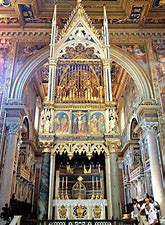
The Cathedral of the Most Holy Savior and of Saints John the Baptist and the Evangelist in the Lateran is the Cathedral for the Pope as Bishop of Rome.  Also known as St. John Lateran or the Lateran Basilica, it is the oldest and highest ranking of the four major basilicas—all in Rome.  It is the oldest church in Europe.

The property once belonged to the Lateranus family, but was given to the Pope by the Emperor Constantine I in the early 4th Century.  The Basilica and adjacent Lateran Palace were dedicated in 324.  (The dedication day of November 9 is a feast day on the Catholic liturgical calendar.)   The Basilica became the Cathedral for Rome and the Palace became the Papal residence until the Popes moved to France in 1309.  Both the Basilica and Palace suffered major damage over the centuries and were rebuilt.  After 1309, they suffered from neglect and from fires during the next few centuries until Sixtus V (Pope from 1585-1590) began reconstruction, which continued into the 18th Century.  The Lateran has hosted five ecumenical councils and all popes were enthroned here until 1870.  During the Second World War, Pope Pius XII used the Lateran as a safe haven for Jews and other refugees hiding from German Nazis and Italian Fascists.

Innocent X, Pope from 1644 to 1655, hired Francesco Borromini, to direct renovations.  Borromini’s plan included twelve niches which were eventually filled with statues of the Apostles created by several Rococo sculptors between 1705 and 1718. Clement XII, Pope from 1730 to 1740, hired Alessandro Galilei to design the neo-classical façade.  The façade is topped with statues of Jesus and the Apostles.  The bronze doors come from the Roman Senate House in the Forum.  The interior features mosaics and frescoes from ground to ceiling.  The main altar contains a small altar used by St. Peter and the tabernacle incorporates a fragment of the table used by Our Lord at the Last Supper.

The Lateran has six papal tombs.  It used to have the tombs of twelve additional popes, but these were destroyed by 14th Century fires.  St. Cyprian is also buried in the Basilica.  Other noteworthy structures include the 4th Century baptistery and the Lateran Obelisk, originally erected in Egypt in the 14th Century BC.  The obelisk was brought to Rome in 357 and erected in the Circus Maximus.  It was brought to its present location in 1588.  The Scala Sancta (Holy Stairs) were brought to Rome by St. Helena in 326.  These stairs once led to the praetorium of Pontius Pilate in Jerusalem and thus were climbed by Our Lord during his Passion.


The first picture is from Flickr and the rest are from Wikipedia.

The Province of Rome has both suburbicarian dioceses (those that are nearest or adjacent to Rome) and suffragan dioceses.  The suburbicarian dioceses have traditionally been led by Cardinal Bishops.

The Province has seven suburbicarian dioceses, all in Lazio.

  • The Diocese of Ostia was established in the 3rd Century.
  • The Diocese of Porto-Santa Rufina was established as the Diocese of Porto in the 3rd Century and acquired its current name in 1986.
  • The Diocese of Frascati was established in the 3rd Century.
  • The Diocese of Albano was established in 326.
  • The Diocese of Palestrina was established in the 4th Century.
  • The Diocese of Sabina-Poggio Mirteto was established as the Diocese of Forum Novum in the 5th Century and acquired its current name in 1925.
  • The Diocese of Velletri-Segni was established as the Diocese of Velletri in 450, was suppressed in 1150, restored in 1914, and acquired its current name in 1986.

The Province has 12 suffragan dioceses in Lazio.

  • The Archdiocese of Gaeta was established as the Diocese of Formia in 303 and became an archdiocese in 1848.
  • The Diocese of Latina-Terracina-Sezze-Priverno was established in the 1st Century as the Diocese of Terracina and acquired its current name in 1986.
  • The Diocese of Tivoli was established in the 2nd Century.
  • The Diocese of Sora-Cassino-Aquino-Pontecorvo was established as the Diocese of Sora in the 3rd Century and acquired its current name in 2014.
  • The Diocese of Anagni-Alatri was established in 480 as the Diocese of Anagni and acquired its current name in 1986.
  • The Diocese of Rieti was established in the 5th Century.
  • The Diocese of Viterbo was established in the 6th Century.
  • The Diocese of Frosinone-Veroli-Ferentino was established as the Diocese of Veroli in 740 and acquired its current name in 1986.
  • The Diocese of Civita Castellana was established in 990.
  • The Diocese of Civitavecchia-Tarquinia was established in the 3rd Century as the Diocese of Civitavecchia, was suppressed in 1093, and restored in 1825.  It acquired its current name in 1986.
  • The Territorial Abbacy of Montecassino was established as a diocese in 450, was suppressed in 500, restored in 529, suppressed again in 580, became an abbacy nullius in 718, a diocese in 1322, before finally becoming a territorial abbacy in 1367.
  • The Territorial Abbacy of Subiaco was established in the 11th Century.

These dioceses in Umbria are immediately subject to the Pope.

  • The Archdiocese of Spoleto-Norcia was established as the Diocese of Spoleto in the First Century, became an archdiocese in 1821, and acquired its current name in 1986.
  • The Diocese of Orvieto-Todi was established in 590 as the Diocese of Orvieto and acquired its current name in 1986.
  • The Diocese of Terni-Narni-Amelia was established as the Diocese of Terni in 140, was suppressed in 550, restored in 653, suppressed again in 760, restored again in 1218, and acquired its current name in 1986.


Province of Fermo

The province consists of the southern portion of the Administrative Region of Marche.  The Diocese of Fermo was established in the 3rd Century and became a metropolitan archdiocese in 1589.

The Romanesque and Gothic Cathedral of the Assumption of Mary in Fermo was built beginning in 1227 and was extensively altered in the 18th Century in a neoclassical style.  The white Istrian stone façade has a 14th Century rose window, a bronze statue of the Madonna, and a door carved with the figures of Christ and his Apostles.  The atrium has 14th Century frescoes and the interior has a 5th Century mosaic showing a peacock—a symbol of the Resurrection.  Pope John XXIII declared the cathedral to be a minor basilica in 1962.


The top picture is from the cathedral website and others are from Wikipedia.

The Province has four suffragan dioceses.

  • The Archdiocese of Camerino-San Severino Marche was established as the Diocese of Camerino in the 3rd Century, became an archdiocese in 1787, and acquired its current name in 1986.
  • The Diocese of Ascoli Piceno was established in the 4th Century.
  • The Diocese of Macerata-Tolentino-Recanati-Cingoli-Treia was established in 1320 as the Diocese of Macerata and acquired its current name in 1985.
  • The Diocese of San Benedetto del Tronto-Ripatransone-Montalto was established as the Diocese of Ripatransone in 1571 and acquired its current name in 1986.


Province of Ancona-Osimo

The province consists of the central portion of the Administrative Region of Marche.  The Diocese of Ancona was established in the 3rd Century, became an archdiocese in 1904, and a metropolitan archdiocese in 1972.  It acquired its current name in 1986.

The Cathedral Basilica of St. Ciriaco (the city’s patron saint) in Ancona is built on a hill and mixes Romanesque, Byzantine, and Gothic styles.  Parts of the Cathedral date to the 6th Century but most of the church was built in the 11th Century.  It was enlarged in the 12th and 13th Centuries.  The Cathedral was damaged in both world wars, but has been restored.  The Cathedral is constructed with white stone with a decoration of Lombard bands.  The bell tower dates to the 14th Century.  The 13th Century Romanesque and Gothic façade has statues of lions made from Veronese red marble and is preceded by a pink stone porch.  The Chapel of the Crucifix contains several figures using sgraffito decoration.  The Madonna Chapel contains a venerated 17th Century Madonna.  The Cathedral was designated a minor basilica by Pope Pius XI in 1926.


The top picture is from Flickr and the rest are from Wikipedia.

The Co-Cathedral of St. Leopardo (the first bishop of the former Diocese of Osimo) in Osimo was built in the 13th Century in a Romanesque style.  In less than a century, it was converted to a Gothic style and has been modified several times since then.  The Cathedral’s 17th Century baptistery has a notable font and a coffered ceiling.  Pope Pius XII designated the church as a minor basilica in 1955.


Both pictures are from Wikipedia.

The Province has four suffragan dioceses.

  • The Diocese of Senigallia was established in the 6th Century.
  • The Diocese of Jesi was established in the 6th Century.
  • The Diocese of Fabriano-Matelica was established as the Diocese of Fabriano in 1728 and acquired its current name in 1986.
  • The Territorial Prelature of Loreto was established as an apostolic administration in 1507, became a diocese in 1586, once again became an apostolic administration in 1935, and became a territorial prelature in 1965.


Province of Perugia–Città della Pieve

The province consists of most of the Administrative Region of Umbria.  The Diocese of Perugia was established in the 2nd Century, became an archdiocese in 1882, and a metropolitan archdiocese in 1972.  It acquired its current name in 1986.

The Gothic Cathedral of St. Lawrence and St. Herculanus in Perugia was built between 1345 and 1490 using marble and travertine.  The Cathedral has a reliquary considered a masterpiece of Italian Renaissance goldsmiths, the 16th Century painting “Deposition from the Cross” by Federico Barocci, the tomb of Pope Martin IV, and a ring reputed to be the Virgin Mary’s wedding ring.


The first picture is from Flickr and the rest are from Wikipedia.

The Co-Cathedral of St. Gervasius and St. Protasius is in Citta della Pieve.  Most of the current Gothic church dates to the 16th and 17th Centuries.  The Co-Cathedral has several 16th Century paintings and other pieces of art.  


The first picture is from the Archdiocesan website and the second is from Wikipedia.

The Province has four suffragan dioceses.

  • The Diocese of Foligno was established in the 1st Century.
  • The Diocese of Assisi-Nocera Umbra-Gualdo Tadino was established as the Diocese of Assisi in the 3rd Century and acquired its current name in 1986.
  • The Diocese of Gubbio was established in the 5th Century.
  • The Diocese of Citta di Castello was established in the 7th Century.


Province of Pesaro

The province consists of the northern portion of the Administrative Region of Marche.  The Diocese of Pesaro was established in the 3rd Century and became a metropolitan archdiocese in 2000.

The Cathedral Basilica of the Assumption in Pesaro was built in the 5th Century but has been modified over the centuries.  Today’s building is primarily neoclassical and Gothic with a plain façade.  The interior features beautiful frescos and mosaics featuring not only religious images, but also animal and fanciful creatures.  Some of the floor mosaics date at least to the Roman period.  The Cathedral has been considered a minor basilica since the early days of Christendom. 


Both pictures are fromWikipedia.

The Province has two suffragan dioceses.

The Archdiocese of Urbino-Urbania-Sant’Angelo in Vado was established as the Diocese of Urbino in the 6th Century and became a metropolitan archdiocese in 1563.  It acquired its current name in 1986 before being demoted to an archdiocese in 2000.

The Diocese of Fano-Fossombrone-Cagli-Pergola was established as the Diocese of Fano in the 1st Century and acquired its current name in 1986 with the suppression of three dioceses.


Definitions

The Catholic Church is mostly divided into ecclesiastical provinces—a province consists of a metropolitan archdiocese and one or more dioceses.  The province and the archdiocese are led by an archbishop.  Each of the dioceses is called a suffragan diocese and is led by a bishop.  Archbishops have some responsibilities for the province, but all bishops answer directly to the Pope.  There are also missionary jurisdictions below the level of a diocese, which include apostolic administrations and territorial prelatures.  A territorial abbacy is a territory surrounding an abbey or monastery, in which the abbot serves as the bishop.

A basilica is an honorary title bestowed on a church by the Pope because of the church’s antiquity, dignity, historical importance, or significance as a center of worship.  Some cathedrals are also basilicas.  Each basilica has a ceremonial umbrella in the papal colors of white and yellow and a ceremonial bell.  Both of these are symbolic of the Pope’s special relationship to the basilica.  There are four major basilicas—all in Rome.  There are over 1,800 minor basilicas throughout the world, although over 60 percent are in Italy, France, Poland, Spain, and Germany.

Thursday, October 1, 2020

 Italy-3

This blog covers eight ecclesiastic provinces in the administrative regions of Abruzzo, Apulia, and Molise in Central and Southern Italy.

See my previous blogs on Italy:

  • 11-6-2019—Italy 1
  • 11-13-2019—Italy 2

Province of Bari-Bitonto

The province consists of the central portion of the Administrative Region of Apulia.  The Diocese of Bari was established in 340 and became a metropolitan archdiocese in 530.  It acquired its current name in 1986.

The Romanesque Cathedral Basilica of St. Sabinus in Bari was built in the 12th and 13th Centuries on the site of the previous cathedral that was destroyed during a war.  It was modeled on the nearby Basilica of St. Nicholas (burial site of the saint).  Much of the Cathedral was refurbished in the 18th Century in a Baroque style, but more recent renovations have restored the original Romanesque features.  The ancient doors are below a rose window with a lintel carved with monsters and beasts.  The dome of the bell tower shows a Moorish influence.  The pulpit has been rebuilt using fragments from the 11th and 12th Centuries and the baldachin from 13th Century fragments.  The adjacent museum has an 11th Century illustrated liturgical parchment scroll.  Pope Pius XII declared the Cathedral to be a minor basilica in 1954.


The first picture is from Pinterest and the others are from Wikipedia.

The Co-Cathedral of the Assumption of Mary in Bitonto was built by the Normans in the 12th Century in a Romanesque style.  The Cathedral has mosaic floors and a marble pulpit.  There are many stone carved pieces, most notably, the marble ambo, which dates to 1229 and is considered a masterpiece of medieval stone carving.


The top picture is from TripAdvisor and the others are from Wikipedia.

The Province has five suffragan dioceses.

  • The Archdiocese of Trani-Barletta-Bisceglie was established as the Diocese of Trani in the 6th Century and became a metropolitan archdiocese in 1063.  It was demoted to an archdiocese in 1980 and acquired its current name in 1986.
  • The Diocese of Conversano-Monopoli was established as the Diocese of Conversano in the 5th Century and acquired its current name in 1986.
  • The Diocese of Andria was established in the 11th Century.
  • The Diocese of Molfetta-Ruvo-Giovinazzo-Terlizzi was established as the Diocese of Molfetta in the 12th Century and acquired its current name in 1986.
  • The Diocese of Altamura-Gravina-Acquaviva delle Fonti was established as the territorial prelature of Altamura in 1248 and became the Diocese of Altamura-Gravina-Acquaviva delle Fonti in 1986.


Province of Taranto

The province consists of the southwestern portion of the Administrative Region of Apulia.  The Diocese of Taranto was established in the 6th Century and became a metropolitan archdiocese in 970.

The Cathedral Basilica of St. Cataldo in Taranto was built in the 12th Century and has an 18th Century Baroque façade with carvings of angels and saints—including St. Cataldo.  The Cathedral is decorated with frescoes and paintings and has a 10th Century baptismal font.  Michelin recommends the Chapel of St. Cataldo (where the early bishop is interred), which is faced with multicolored marble and embellished with 18th Century statues.  The Blessed Sacrament chapel is of Baroque design and the crypt features 12th Century frescos.  The Cathedral was designated a minor basilica by Pope Paul VI in 1964.


Pictures are from Dreamstime, Expedia, and Wikipedia.

The Great Mother of God Co-Cathedral in Taranto is a modern concrete and steel church built in the early 1970s.


Pictures are from Desisare and Pinterest.

The Province has two suffragan dioceses.

  • The Diocese of Castellaneta was established in 1023.
  • The Diocese of Oria was established in 1591.


Province of Chieti-Vasto

The province consists of the southeastern portion of the Administrative Region of Abruzzo.  The Diocese of Chieti was established in the 6th Century and became a metropolitan archdiocese in 1526.  It acquired its current name in 1986.

The brick and limestone Cathedral of St. Justin in Chieti was originally built in the 11th Century in a Gothic style, but was rebuilt in a Romanesque style in the 13th Century.  The bell tower was completed in 1498 and the façade in 1920.  The nave has several paintings and many side chapels.  The crypt has several murals and frescoes dating to the 14th Century. 


The first picture is from Flickr, the second from Pinterest, and the others from Wikipedia.

The Co-Cathedral of St. Joseph in Vasto was built in the 13th Century and incorporates both Baroque and neo-Gothic styles.  The bell tower dates to 1730 and the stained-glass windows and a triptych of St. Michael date to the 16th Century.


All pictures are from Wikipedia.

The Province has one suffragan diocese.

  • The Archdiocese of Lanciano-Ortona was established as a diocese in 1515 and was promoted to an archdiocese in 1562 and to a metropolitan archdiocese in 1834.  It was demoted to an archdiocese in 1982 and acquired its current name in 1986.  The Basilica of St. Thomas the Apostle in Ortona contains the tomb of Thomas.


Province of L’Aquila

The province consists of the western portion of the Administrative Region of Abruzzo.  The Diocese of Forcona was created in 1178 and became the Diocese of L’Aquila was established in 1257.  This became an archdiocese in 1876 and a metropolitan archdiocese in 1972.

The Cathedral of Saints Maximus and George in L’Aquila was built in the 13th Century, but was destroyed by a 1703 earthquake.  The cathedral was restored, but heavily damaged once again by an earthquake in 2009.  Restoration is underway and the Basilica of San Guiseppe Artigiano serves as the temporary cathedral.  The pictures are of the pre-earthquake cathedral.


Both pictures are from Wikipedia.

The Province has two suffragan dioceses.

  • The Diocese of Sulmona-Valva was established as the Diocese of Sulmona in the 6th Century and acquired its current name in 1986.
  • The Diocese of Avezzano was established in the 9th Century and acquired its current name in 1986.


Province of Campobasso-Bojano

The province consists of the Administrative Region of Molise.  The Diocese of Bojano was established in 1060 and became a metropolitan archdiocese in 1976.  It acquired its current name in 1982.

The Cathedral of the Holy Trinity in Campobasso was built in a neoclassical style in 1829 to replace a 16th Century cathedral that was destroyed by an 1805 earthquake.


Pictures are from TripAdvisor and Wikipedia.

The Co-Cathedral of St. Bartholomew in Bojano was built in the 11th Century, but has been damaged several times by earthquakes and restored.  The apse retains a Norman style.


From Wikipedia.

The Province has three suffragan dioceses.

  • The Diocese of Isernia-Venafro was established as the Diocese of Isernia in the 5th Century and acquired its current name in 1986 with the suppression of the Diocese of Venafro.
  • The Diocese of Termoli-Larino was established in 940 as the Diocese of Termoli and acquired its current name in 1986 with the suppression of the Diocese of Larino.  The Cathedral of the Purification of Mary in Termoli contains the tomb of St. Timothy.
  • The Diocese of Trivento was established in 940.


Province of Foggia-Bovino

The province consists of the northern portion of the Administrative Region of Apulia.  The Diocese of Foggia was established in 1855 and became a metropolitan archdiocese in 1979.  It acquired its current name in 1986.

The Cathedral Basilica of the Assumption of the Virgin Mary into Heaven in Foggia (also known as St. Mary of Foggia) was built in a Romanesque style in the 12th Century.  It was damaged by an earthquake in 1731 and was restored in a Baroque style.  The Cathedral contains an ancient icon of the Madonna of the Seven Veils.  Pope Pius VII declared the Cathedral to be a minor basilica in 1806.


The last two pictures are from Wikipedia.

The Co-Cathedral Basilica of the Assumption in Bovino was destroyed by an earthquake in 1930 and rebuilt in 1936.  It was declared a minor basilica by Pope Paul VI in 1970.


The top pictures is from Pinterest and the bottom is from Wikipedia.

The Province has four suffragan dioceses.

  • The Archdiocese of Manfredonia-Vieste-San Giovanni Rotondo was established as the Diocese of Siponto in the 3rd Century.  This became the Metropolitan Archdiocese of Manfredonia in 1074.  It was demoted to an archdiocese in 1979 and acquired its current name in 2002.
  • The Diocese of Lucera-Troia was established as the Diocese of Lucera in the 4th Century and acquired its current name in 1986.
  • The Diocese of San Severo was established as the Diocese of Civitate in the 11th Century and acquired its current name in 1580.
  • The Diocese of Cerignola-Ascoli Satriano was established as the Diocese of Ascoli Satriano in the 11th Century and acquired its current name in 1986.


Province of Lecce

The province consists of the southeastern portion of the Administrative Region of Apulia.  The Diocese of Lecce was established in 1057 and became a metropolitan archdiocese in 1980.

The Cathedral of the Assumption of Mary in Lecce was originally built in 1144, but was rebuilt between 1659 and 1682 in a Baroque style.  The Baroque northern façade has statues of Saints Giusto, Fortunato, Orontius, Peter, and Paul.  The 18th Century main altar is made of marble and gold-plated bronze and has paintings depicting the Assumption and Old Testament prophets.  The interior ceiling has paintings by Giuseppe da Brindisi.  The Cathedral also has 12 highly decorated side chapels.  The 235-foot bell tower dates to the 17th Century.  The 16th Century crypt is held up with 92 columns with capitals adorned with sculpted animals.


The first picture is from Flickr and the rest are from Wikipedia.

The Province has four suffragan dioceses.

  • The Archdiocese of Brindisi-Ostuni was established as the Diocese of Brindisi in the 4th Century, became a metropolitan archdiocese in the 10th Century, was demoted to an archdiocese in 1980, and acquired its current name in 1986.
  • The Archdiocese of Otranto was established as a diocese in the 7th Century, became a metropolitan archdiocese in the 11th Century, before once again becoming an archdiocese in 1980.
  • The Diocese of Ugento-Santa Maria di Leuca was established in the 13th Century as the Diocese of Ugento and acquired its current name in 1959.
  • The Diocese of Nardo-Gallipoli was established as an abbacy nullius in 1090, became the Diocese of Nardo 1413, and acquired its current name in 1986. (An abbacy nullius is a territory surrounding an abbey or monastery, in which the abbot serves as the bishop.)


Province of Pescara-Penne

The province consists of the northeastern portion of the Administrative Region of Abruzzo.  The Diocese of Penne was established in the 5th Century was renamed Penne-Pescara in 1949.  This became a metropolitan archdiocese in 1982.

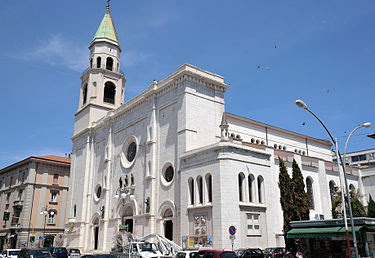
The Cathedral of St. Cetteus in Pescara was built in the 1930s in a Romanesque Revival style to replace a ruined medieval church.  The façade has three rose windows and is flanked on one side by the bell tower.  The Cathedral has a 17th Century painting of St. Francis thought to be by Guercino. 


All pictures are from Wikipedia.

The Co-Cathedral of St. Maximus is in Penne.  The Cathedral was built over a 10th Century crypt in an Italian Gothic style.  Its campanile is 200 feet high.  The Co-Cathedral was heavily damaged in 1944 but was restored.


All pictures are from Wikipedia.

The Province has one suffragan diocese.

  • The Diocese of Teramo-Atri was established in the 5th Century as the Diocese of Teramo.  It acquired its current name in 1986 with the suppression of the Diocese of Atri.


Definitions

The Catholic Church is mostly divided into ecclesiastical provinces—a province consists of a metropolitan archdiocese and one or more dioceses.  The province and the archdiocese are led by an archbishop.  Each of the dioceses is called a suffragan diocese and is led by a bishop.  Archbishops have some responsibilities for the province, but all bishops answer directly to the Pope. 

A basilica is an honorary title bestowed on a church by the Pope because of the church’s antiquity, dignity, historical importance, or significance as a center of worship.  Some cathedrals are also basilicas.  Each basilica has a ceremonial umbrella in the papal colors of white and yellow and a ceremonial bell.  Both of these are symbolic of the Pope’s special relationship to the basilica.