Friday, May 28, 2021

 South Asia-2  

This blog discusses the Catholic Church in Sri Lanka, Thailand, and Vietnam.

Sri Lanka

The first Sinhalese arrived in what is now Sri Lanka from northern India six centuries before Christ.  Buddhism was introduced in about 250 B.C.  In the 14th century, a south Indian dynasty established a Tamil kingdom in northern Sri Lanka. The Portuguese controlled the coastal areas of the island in the 16th century followed by the Dutch in the 17th century. The island was ceded to the British in 1796, became a crown colony in 1802, and was formally united under British rule by 1815. As Ceylon, it became independent in 1948; its name was changed to Sri Lanka in 1972. 

The Portuguese introduced Catholicism, but the Dutch outlawed Catholicism in favor of Protestantism.  The British eliminated the anti-Catholic Dutch laws in 1806.  Blessed Joseph Vaz, and Oratorian priest, was largely responsible for keeping the Catholic Faith alive in Ceylon during Dutch rule.

Slightly more than 70 percent of Sri Lanka’s 23 million people are Buddhist.  Another 13 percent are Hindu, 10 percent are Muslim and 7 percent are Christian.  Over 80 percent of the Christians are Catholic.  Catholics are served by the Province of Colombo.

Province of Colombo

The province consists of the nation of Sri Lanka.  The Metropolitan Archdiocese of Colombo was established as the Diocese of Ceylon in 1834 and became the Metropolitan Archdiocese of Colombo in 1886.  

St. Lucia’s Cathedral in Colombo was built to replace an earlier, smaller cathedral.  Construction began on the current Renaissance and Baroque structure in 1872, and although the first Mass was celebrated in 1881, construction would not be completed until 1902.  The interior, which can hold 6,000 worshipers, has intricately carved dark wood confessionals and several large statues of saints, most of which were installed in 1924.  The main altar has a statue of St. Lucy holding her eyes in her hand.  The Cathedral also has a dark-skinned Madonna and Child statue known as Our Lady of Kotahena, which has been at the Cathedral since 1938.


From Dreamstime and Wikipedia.

The Province has 11 suffragan dioceses.

  • The Diocese of Jaffna was created as an apostolic vicariate in 1845 and became a diocese in 1886.
  • The Diocese of Kandy was created as an apostolic vicariate in 1883 and became a diocese in 1886.
  • The Diocese of Galle was created in 1893.
  • The Diocese of Trincomalee was created in 1893.
  • The Diocese of Chilaw was created in 1939.
  • The Diocese of Badulla was created in 1972.
  • The Diocese of Mannar was created in 1981.
  • The Diocese of Anuradhapura was created as an apostolic prefecture in 1975 and became a diocese in 1982.
  • The Diocese of Kurunegala was created in 1987.
  • The Diocese of Ratnapura was created in 1995.
  • The Diocese of Batticaloa was created in 2012.


Thailand

The Kingdom of Siam was established in the 1300s and this became a constitutional monarchy in 1932.  Thailand is the only country in Southeast Asia to have never been colonized by a European nation.  Catholicism came to what is now Thailand by Portuguese traders and the missionaries that followed them in the mid-1500s.  Serious evangelization began about a century later, but was ended with persecution in 1688.  Evangelization began again in the 19th Century.    

Almost 95 percent of Thailand’s 69 million people are Buddhist.  Another 4 percent are Muslim and 1 percent are Christian.  The Christians are equally divided between Catholics and Protestants.  Catholics are served by the ecclesiastic provinces of Bangkok and Thare and Nonseng.

Province of Bangkok

The province consists of northwestern and southwestern Thailand.  The Metropolitan Archdiocese of Bangkok was established as the Apostolic Vicariate of Siam in 1662.  This became the Metropolitan Archdiocese of Bangkok in 1965.  

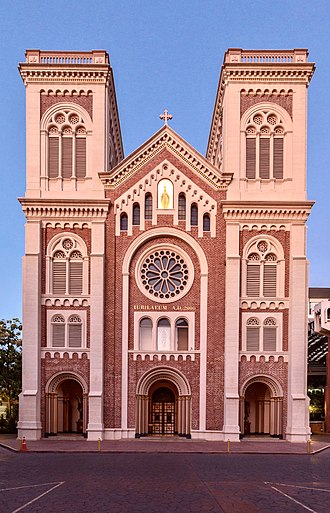
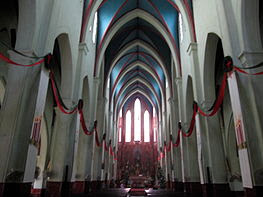
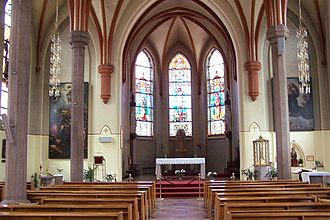
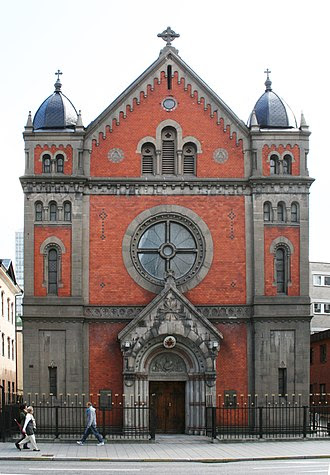
The Cathedral of the Assumption in Bangkok was designed by a French architect and completed in 1821.  The cathedral was largely reconstructed between 1910 and 1918 in a Romanesque style.  The cathedral was heavily damaged during the Second World War, but has been restored.  The red-brick building has two square towers and an ornate interior.  Stained glass windows were installed during the most recent renovation.  The Cathedral has been visited by both Pope John Paul II and Pope Francis.  The crypt contains the remains of Blessed Nicholas Boonkerd Kitbamrung, a Thai priest and martyr.  


The first picture is from Flickr, the second from Pinterest, and the rest from Wikipedia.

The Province has six suffragan dioceses.

  • The Diocese of Ratchaburi was created as a Mission sui juris in 1930, became an apostolic prefecture in 1934, and apostolic vicariate in 1941, and a diocese in 1965.
  • The Diocese of Chanthaburi was created as an apostolic vicariate in 1944 and became a diocese in 1965.
  • The Diocese of Chiang Mai was created as an apostolic prefecture in 1959 and became a diocese in 1965.
  • The Diocese of Nakhon Sawan was created in 1967.
  • The Diocese of Surat Thani was created in 1969.
  • The Diocese of Chiang Rai was created in 2018.


Province of Thare and Nonseng

The province consists of eastern Thailand.  The Metropolitan Archdiocese of Thare and Nonseng was established as an apostolic vicariate in 1899 and became a metropolitan archdiocese in 1965.  

St. Michael the Archangel Cathedral in Tha Rae is a modern building resembling a ship.  The front of the cathedral rises higher than the rest of the building and is topped with a cross.


Both pictures are from tourist websites.

St. Anne’s Co-Cathedral in Mueang Nakhon Phanom was built in the last century and features French-colonial, Thai, and Vietnamese design features.  It has twin towers and features a statue of St. Anne in front of the entrance.  The grounds have mango and papaya trees.


The first picture is from Inspirock and the others are from local tourist websites.

The Province has three suffragan dioceses.

  • The Diocese of Nakhon Ratchasima was created as an apostolic vicariate in 1965 and became a diocese later that year.
  • The Diocese of Ubon Ratchathani was created as an apostolic vicariate in 1953 and became a diocese in 1965.
  • The Diocese of Udon Thani was created as an apostolic prefecture in 1953 and became a diocese in 1965.


Vietnam

France conquered Vietnam between 1858 and 1884 and it became part of French Indochina in 1887. Vietnam declared independence after the Second World War, but France continued to rule until it was defeated by Vietnamese Communist forces in 1954.  At that time Vietnam was partitioned into the Communist North and the non-Communist South.  Reunification and a Communist government came in 1975 after American forces withdrew.

Portuguese and Spanish missionaries came to Vietnam in the 16th Century, but successful evangelization did not happen until Jesuits (mostly Italian, Portuguese, and Japanese) came in the early 17th Century.  The Jesuits even developed an alphabet for the Vietnamese language.  The Jesuits were followed by Foreign Missions Society missionaries from France, Dominicans from Spain and Italy, an Augustinians from Italy.

About 10 percent of Vietnam’s 99 million people are Buddhist, 7 percent are Catholic, and 1 percent are Protestant.  The other 82 percent have no religious beliefs.  Catholics are served by one of three ecclesiastic provinces:  Hanoi, Ho Chi Minh City, and Hue.

Province of Hanoi

The province consists of northern Vietnam.  The Apostolic Vicariate of Tonking was created in 1659.  This became the Metropolitan Archdiocese of Hanoi in 1960.

Construction of St. Joseph’s Cathedral in Hanoi was completed in 1886 in a Gothic Revival style.  It was built by the French and resembles Notre Dame Cathedral in Paris.  It is the oldest church in Hanoi.  The granite, brick, and concrete cathedral has twin bell towers, each 103 feet tall and holding five bells.  The stained glass windows were made in France.  The Cathedral was closed from the late 1950s until 1990 by the Communist government.


All pictures are from Wikipedia.

The Province has ten suffragan dioceses.

  • The Diocese of Hai Phong was created as the Apostolic Vicariate of Eastern Tonking in 1678 and became the Diocese of Hai Phong in 1960.
  • The Diocese of Vinh was created as the Apostolic Vicariate of Southern Tonking in 1846 and became the Diocese of Vinh in 1960.
  • The Diocese of Bui Chu was created as the Apostolic Vicariate of Central Tonking in 1848 and became the Diocese of Bui Chu in 1960.
  • The Diocese of Bac Ninh was created as the Apostolic Vicariate of Northern Tonking in 1883 and became the Diocese of Bac Ninh in 1960.
  • The Diocese of Hung Hoa was created as the Apostolic Vicariate of Upper Tonking in 1895 and became the Diocese of Hung Hoa in 1960.
  • The Diocese of Phat Diem was created as the Apostolic Vicariate of Coastal Tonking in 1901 and became the Diocese of Phat Diem in 1960.
  • The Diocese of Thanh Hoa was created as an apostolic vicariate in 1932 and became a diocese in 1960.
  • The Diocese of Thai Binh was created as an apostolic vicariate in 1936 and became a diocese in 1960.  
  • The Diocese of Lang Son et Cao Bang was created as an apostolic prefecture in 1913, became an apostolic vicariate in 1939, and became a diocese in 1960.
  • The Diocese of Ha Tinh was created in 2018.


Province of Ho Chi Minh City (Saigon)

The province consists of southern Vietnam.  The Apostolic Vicariate of Western Cochin was established in 1844 and this became the Metropolitan Archdiocese of Saigon in 1960.  It was renamed in 1976.

Notre Dame Cathedral Basilica in Ho Chi Minh City was built by the French between 1877 and 1880.  The stone and brick cathedral is built in a Romanesque style with building materials imported from France.  There are two 190-foot bell towers, each with three bronze bells.  Pope John XXIII declared the cathedral to be a minor basilica in 1962. 


The top picture is from Flickr and the others are from Wikipedia.

The Province has nine suffragan dioceses.

  • The Diocese of Vinh Long was established in as an apostolic vicariate in 1938 and became a diocese in 1960.
  • The Diocese of Can Tho was established as an apostolic vicariate in 1955 and was promoted to a diocese in 1960.
  • The Diocese of Da Lat was established in 1960.
  • The Diocese of Long Xuyen was established in 1960.
  • The Diocese of My Tho was established in 1960.
  • The Diocese of Phu Cuong was established in 1965.
  • The Diocese of Xuan Loc was established in 1965.
  • The Diocese of Phan Thiet was established in 1975.
  • The Diocese of Ba Ria was established in 2005.


Province of Hue

The province consists of Central Vietnam.  The Metropolitan Archdiocese of Hue was established as the Apostolic Vicariate of Northern Cochin in 1850 and this became the Metropolitan Archdiocese of Hue in 1960.

Immaculate Heart of Mary Cathedral in Hue was designed by architect Ngo Viet Thu in a modern design.  Construction began in 1963, but because of war and turmoil in Vietnam, was not completed until 2000.  The brick and stone façade culminates in twin towers each topped with a cross.  The Cathedral can hold 2,500 worshippers.


The first picture is from Pinterest and the others are from Wikipedia.

The Province has five suffragan dioceses.

  • The Diocese of Quy Nhon was created as the Apostolic Vicariate of Cochin in 1659, became the Apostolic Vicariate of Eastern Cochin in 1844 and was promoted to a diocese in 1960.
  • The Diocese of Kontum was created as an apostolic vicariate in 1932 and became a diocese in 1960.
  • The Diocese of Nha Trang was created as an apostolic vicariate in 1957 and became a diocese in 1960.
  • The Diocese of Da Nang was created in 1963.
  • The Diocese of Ban Me Thuot was created in 1967.


Definitions

The Catholic Church is mostly divided into ecclesiastical provinces—a province consists of a metropolitan archdiocese and one or more dioceses.  The province and the archdiocese are led by an archbishop.  Each of the dioceses is called a suffragan diocese and is led by a bishop.  Archbishops have some responsibilities for the province, but all bishops answer directly to the Pope.  There are also missionary jurisdictions below the level of a diocese.  These include apostolic vicariates, apostolic prefectures, and Missions sui juris.

A basilica is an honorary title bestowed on a church by the Pope because of the church’s antiquity, dignity, historical importance, or significance as a center of worship.  Some cathedrals are also basilicas.  Each basilica has a ceremonial umbrella in the papal colors of white and yellow and a ceremonial bell.  Both of these are symbolic of the Pope’s special relationship to the basilica. 


Saturday, May 1, 2021

 Angola

The Kingdom of Kongo consisted of a large part of central Africa from the 14th to the 19th Centuries.  That portion of the Kingdom which is now Angola started trading with the Portuguese in the late 15th Century.  Portugal established coastal towns and trading posts at that time and introduced Catholicism.  Angola became a Portuguese colony in 1914 and gained independence in 1975.  

About half of Angola’s 33 million people are Catholic.  Other Christians, mostly Protestant, account for another 38 percent.  There are five Catholic ecclesiastic provinces—Huambo, Luanda, Lubango, Malanje, and Saurimo.  Maronite-rite Catholics are under the jurisdiction of the Diocese of the Annunciation in Ibadan, Nigeria.

Province of Luanda

The province consists of the civil provinces of Luanda, Bengo, Cabinda, Cuanza Sul, and Zaire, in northwestern Angola.  The Diocese of Angola and the Congo was established in 1596 and this became the Metropolitan Archdiocese of Luanda in 1940. 

The Cathedral of the Holy Savior and Our Lady of Remedies in Luanda was built in the 17th Century.  It was in ruins by the late 19th Century and was restored between 1880 and 1900.  There are bell towers on both sides of the façade.


Both pictures are from Wikipedia.

The Province has five suffragan dioceses.

  • The Diocese of Sumbe was established in 1975 and acquired its current name in 2006.
  • The Diocese of Mbanza Congo was established as the Diocese of Sao Salvador da Congo in 1596, was suppressed in 1628, and was restored under its current name in 1984.
  • The Diocese of Cabinda was established in 1984.
  • The Diocese of Caxito was established in 2007.
  • The Diocese of Viana was established in 2007.


Province of Huambo

The province consists of the civil provinces of Huambo, Benguela, and Bie in west central Angola.  The Diocese of New Lisbon was established in 1940 and this became the Metropolitan Archdiocese of Huambo in 1977.

The Cathedral of Our Lady of the Immaculate Conception in Huambo was built between 1937 and 1939.


From the Archdiocesan website.

The Province has three suffragan dioceses.

  • The Diocese of Kwito-Bie was established as the Diocese of Silva Porto in 1940 and acquired its current name in 1979.
  • The Diocese of Benguela was established in 1970.
  • The Diocese of Ganda was established in 2024.


Province of Lubango

The province consists of the civil regions of Huila, Cuando Cubango, Cunene, and Namibe, in southern Angola.  The Metropolitan Archdiocese of Lubango was established as a diocese in 1955 and became a metropolitan archdiocese in 1977.

St. Joseph’s Cathedral in Lubango was built in 1939 in a Gothic style with some art deco influence.  It has two towers.


Pictures are from Pinterest and Wikipedia.

The Province has three suffragan dioceses.

  • The Diocese of Ondjiva was established a Mission sui juris in 1881, which was suppressed in 1940.  It became diocese in 1975.
  • The Diocese of Menongue was established in 1975.
  • The Diocese of Namibe was established in 2009.


Province of Malanje

The province consists of the civil provinces of Malanje, Cuanza Norte, and Uije, in northwestern Angola.  The Diocese of Malanje was created in 1957 and became a metropolitan archdiocese in 2011.

The Cathedral of Our Lady of the Assumption is in Malanje.  Construction began on the cathedral in 1862, but it was never completed.  It was rebuilt in the 1920s.  There are towers on either side of the façade. 


From a local travel website.

The Province has two suffragan dioceses.

  • The Diocese of Uije was established in 1967.
  • The Diocese of Ndalatando was established in 1990.


Province of Saurimo

The province consists of the civil provinces of Lunda Sul, Lunda Norte, and Moxico, in eastern Angola.  The Metropolitan Archdiocese of Saurimo began as a diocese in 1975 and became a metropolitan archdiocese in 2011.

The Cathedral of Our Lady of the Assumption in Saurimo was built between 1958 and 1959.


From Wikipedia.

The Province has two suffragan dioceses.

  • The Diocese of Luena was established in 1963.
  • The Diocese of Dundo was established in 2001.


Definitions

The Catholic Church is mostly divided into ecclesiastical provinces—a province consists of a metropolitan archdiocese and one or more dioceses.  The province and the archdiocese are led by an archbishop.  Each of the dioceses is called a suffragan diocese and is led by a bishop.  Archbishops have some responsibilities for the province, but all bishops answer directly to the Pope.  There are also missionary jurisdictions below the level of a diocese which include Missions sui juris.

Saturday, April 24, 2021

Democratic Republic of the Congo

The Kingdom of Kongo consisted of a large part of central Africa from the 14th to the 19th Centuries.  King Leopold II of Belgium acquired the Congo as his personal property in the 1870s.  Leopold forced the people to work on rubber plantations and millions died.  International pressure forced Leopold to make the area a colony of Belgium at which time it became known as the Belgium Congo.  The Congo gained its independence from Belgium in 1960 and it became Zaire in 1965.  Ethnic strife and civil war erupted in mid-1990s during which time the Archbishop of Bukavu was assassinated and the nation became known as the Democratic Republic of the Congo. 

Catholic missionaries first came to the Congo in 1490, but modern evangelization did not begin until the late 1800s.  Today, the Democratic Republic of the Congo has 102 million people.  Estimates of religious affiliation of its people varies greatly.  Catholics account for between 40 to 50 percent and other Christians for 40 to 50 percent.  These other Christians included Protestants as well as quasi-Christian African churches.  About 1 to 5 percent of the people as Muslim.  There are six Catholic provinces:  Bukava, Kananga, Kinshasa, Kisangani, Lubumbashi, and Mbandaka-Bikoro.  Maronite-rite Catholics are under the jurisdiction of the Diocese of the Annunciation in Ibadan, Nigeria.

Province of Kinshasa

The province consists of the civil provinces of Kinshasa, Kongo Central, Kwango, Kwilu, and Mai-Ndombe in west central Congo.  The Mission sui juris of Congo was established in 1886 and this became an apostolic vicariate in 1888.  It was promoted to the Metropolitan Archdiocese of Leopoldville in 1959 and acquired its current name in 1966.  

Our Lady (Notre Dame) of the Congo Cathedral in Kinshasa was built in 1947.


The first picture is from Panaramio and the other two are from TripAdvisor.

The Province has eight suffragan dioceses.

  • The Diocese of Kikwit was established as a Mission sui juris in 1892, became an apostolic prefecture in 1903, an apostolic vicariate in 1928, and a diocese in 1959.
  • The Diocese of Matadi was established as an apostolic prefecture in 1911, became an apostolic vicariate in 1930, and a diocese in 1959.
  • The Diocese of Kisantu was established as an apostolic vicariate in 1931 and became a diocese in 1959.
  • The Diocese of Boma was established as an apostolic vicariate in 1934 and became a diocese in 1959.
  • The Diocese of Idiofa was established as an apostolic prefecture in 1937, became an apostolic vicariate in 1948, and a diocese in 1959.
  • The Diocese of Inongo was established as an apostolic vicariate in 1953 and became a diocese in 1959.
  • The Diocese of Popokabaka was established in 1961.
  • The Diocese of Kenge was established as an apostolic prefecture in 1957 and became a diocese in 1963.


Province of Kisangani

The province consists of the civil provinces of Bas-Uele, Haut-Uele, Ituri, and Tshopo in northeastern Congo.  The Apostolic Prefecture of Stanley Falls was established in 1904, became an apostolic vicariate in 1908, and became the Metropolitan Archdiocese of Stanleyville in 1959.  It acquired its current name in 1966.

Our Lady of the Rosary Cathedral in Kisangani was built in 1899 and it has been restored several times.


From Wikipedia.

The Province has eight suffragan dioceses.

  • The Diocese of Buta was established as an apostolic prefecture in 1898, became an apostolic vicariate in 1924, and a diocese in 1959.
  • The Diocese of Isiro-Niangara was established as an apostolic prefecture in 1911, became an apostolic vicariate in 1924, and a diocese in 1959.
  • The Diocese of Bunia was established as an apostolic prefecture in 1922, became an apostolic vicariate in 1933, and a diocese in 1959.
  • The Diocese of Bondo was established as an apostolic prefecture in 1926, became an apostolic vicariate in 1937, and a diocese in 1959.
  • The Diocese of Wamba was established as an apostolic vicariate in 1949 and became a diocese in 1959.
  • The Diocese of Isangi was established as an apostolic prefecture in 1951 and became a diocese in 1962.
  • The Diocese of Mahagi-Nioka was established in 1962.
  • The Diocese of Doruma-Dungu was established as an apostolic prefecture in 1958 and became a diocese in 1967.


Province of Kananga

The province consists of the civil provinces of Lomami, Kasai, Kasai-Central, Kasai-Oriental, and Sankuru in the central part of the Congo.  The Mission sui juris of Upper Kasai was established in 1901.  This became an apostolic prefecture in 1904, an apostolic vicariate in 1917, and a metropolitan archdiocese in 1959. 

The Cathedral of St. Joseph is in Mikalayi, about 22 miles southwest of Kananga.  This was the first settlement of Catholic missionaries in Kasai in 1891.


From a local website.

The Pro-Cathedral of St. Clement is in Kananga.


The first picture is from a local website and the second is from Panaramio.

The Province has eight suffragan dioceses.

  • The Diocese of Tshumbe was established as an apostolic prefecture in 1936, became an apostolic vicariate in 1947, and a diocese in 1959.
  • The Diocese of Kabinda was established as an apostolic vicariate in 1953 and was promoted to a diocese in 1959.
  • The Diocese of Luebo was established as an apostolic vicariate in 1959 and became a diocese later that year.
  • The Diocese of Mweka was established as an apostolic prefecture in 1953 and became a diocese in 1964.
  • The Diocese of Mbujimayi was established as an apostolic administration in 1963 and became a diocese in 1966.
  • The Diocese of Kole was established as an apostolic prefecture in 1951 and became a diocese in 1967.
  • The Diocese of Lwiza was established in 1967.
  • The Diocese of Tshilomba was established in 2022.


Province of Lubumbashi

The province consists of the civil provinces of Haut-Katanga, Haut-Lomami, Lualaba, and Tanganyika in southern Congo.  The apostolic prefecture of Katanga was established in 1910, became an apostolic vicariate in 1932 and a metropolitan archdiocese in 1959. 

Sts. Peter and Paul Cathedral in Lubumbashi was built in 1920 in a Romanesque Revival style.


Both pictures are from Wikipedia.

The Province has seven suffragan dioceses.

  • The Diocese of Kalemie-Kirungu was established as an apostolic vicariate in 1887 and a diocese in 1959.
  • The Diocese of Kongolo was established as an apostolic prefecture in 1911, became an apostolic vicariate in 1935, and became a diocese in 1959.
  • The Diocese of Kamina was established as an apostolic prefecture in 1922, became an apostolic vicariate in 1934, and became a diocese in 1959.
  • The Diocese of Sakania-Kipushi was established as an apostolic prefecture in 1925, became an apostolic vicariate in 1939, and a diocese in 1959.
  • The Diocese of Kilwa-Kasenga was established as an apostolic prefecture in 1948 and became a diocese in 1962.
  • The Diocese of Kolwezi was established in 1971.
  • The Diocese of Manono was established in 1971.


Province of Mbandaka-Bikoro

The province consists of the civil provinces of Equateur, Mongala, Nord-Ubangi, Sud-Ubangi, and Tshuapa in northwestern Congo.  The Apostolic Prefecture of Tsuapa was established in 1924, became the Apostolic Vicariate of Coquilhatville in 1932, and a metropolitan archdiocese in 1959.  It acquired its current name in 1975.  

The Cathedral of St. Eugene in Mbankaka was built by Trappist missionaries between 1910 and 1914.  It was built primarily with bricks (hundreds of thousands of them) and has a bell that came from Westmalle Abbey in Belgium.  [As an aside, the Trappist monks at Westmalle Abbey operate a brewery and one of their beers is considered to be one of the best in the world.]


The first picture is from a blog and the second is from Wikipedia.

The Co-Cathedral of St. Vincent de Paul is in Bikoro. 

The Province has six suffragan dioceses.

  • The Diocese of Lisala was established as an apostolic vicariate in 1919 and a diocese in 1959.
  • The Diocese of Molegbe was established as an apostolic prefecture in 1911, became an apostolic vicariate in 1935, and a diocese in 1959.
  • The Diocese of Basankusu was established as an apostolic prefecture in 1926, became an apostolic vicariate in 1948, and a diocese in 1959.
  • The Diocese of Bokungu-Ikela was established in 1961.
  • The Diocese of Lolo was established as an apostolic prefecture in 1937 and became a diocese in 1962.
  • The Diocese of Budjala was established in 1964.


Province of Bukavu

The province consists of the civil provinces of Maniema, North Kivu, and South Kivu in the east central part of the Congo.  The Metropolitan Archdiocese of Bukavu started as an apostolic vicariate in 1929 and became a metropolitan archdiocese in 1959.

The brick Our Lady of Peace Cathedral in Bukavu was built between 1948 and 1951.


The top picture is from a blog and the bottom picture is from Wikipedia.

The Province has five suffragan dioceses.

  • The Diocese of Butembo-Beni was established as a Mission sui juris in 1934, became an apostolic vicariate in 1938, and a diocese in 1959.  It acquired its current name in 1967.
  • The Diocese of Kasongo was established as an apostolic vicariate in 1952 and became a diocese in 1959.
  • The Diocese of Kindu was established as an apostolic vicariate in 1956 and became a diocese in 1959.
  • The Diocese of Goma was established as an apostolic vicariate in 1959 and became a diocese later that same year.
  • The Diocese of Uvira was established in 1962.


Definitions

The Catholic Church is mostly divided into ecclesiastical provinces—a province consists of a metropolitan archdiocese and one or more dioceses.  The province and the archdiocese are led by an archbishop.  Each of the dioceses is called a suffragan diocese and is led by a bishop.  Archbishops have some responsibilities for the province, but all bishops answer directly to the Pope.  There are also missionary jurisdictions below the level of a diocese including apostolic vicariates, apostolic prefectures, apostolic administrations, and Missions sui juris. 


Saturday, April 10, 2021

Other Nations—6

Scandinavia

This blog is the sixth of six to discuss nations that do not have ecclesiastic provinces.  Typically the jurisdictions are subject directly to the pope.  This blog covers Scandinavia—Denmark (including Greenland and the Faroe Islands), Finland (including the Aland Islands), Iceland, Norway (including Svalbard and Jan Mayen), and Sweden.

Denmark

Denmark became a kingdom by the late 8th Century and for the next two centuries, Danish Vikings raided and settled parts of England and Western Europe.  St. Ansgar brought Catholicism to Denmark in the 9th Century and he established a diocese in 831.  Harald Bluetooth, the King of Denmark, declared his nation to be Catholic around 965, and by 1060, there were six Catholic dioceses.  This changed in 1536 when the nation embraced Lutheranism.  Catholicism was outlawed until 1682, but even then, conversion from Lutheranism was illegal.  Full religious rights for Catholics, and others, was not allowed until 1849. 

The Faroe Islands, which are part of Denmark, were settled by Vikings in the 9th Century and have been part of Denmark since the 14th Century.  A Catholic diocese was established there in 1076.  Greenland, which is the world’s largest island, is also part of Denmark.  The Vikings came to Greenland in the 10th Century from Iceland and Danish colonization began in the 18th Century.  Greenland became part of Denmark in 1953.  Catholic missionaries came to Greenland at the beginning of the 11th Century and established churches—the first known churches in the Western Hemisphere.  A diocese was established in 1124 at Gardar in southern Greenland, near modern day Igaliku.  Both the Faroe Islands and Greenland embraced Lutheranism in the 1530s.    

Denmark has 5.9 million people, including 58,000 in Greenland and 51,000 in the Faroe Islands.  About 75 percent of Denmark’s people belong to the official Evangelical Lutheran Church and 6 percent are Muslim.  Lutherans account for at least 90 percent of the people in Greenland and the Faroe Islands.  Denmark’s 48,000 Catholics are part of the Diocese of Copenhagen, which is immediately subject to the Pope.  This began as the Apostolic Vicariate of Northern Missions in 1868 before being demoted to the Apostolic Prefecture of Denmark in 1869.  It once again became an apostolic vicariate in 1892 before becoming the Diocese of Copenhagen in 1953.  St. Ansgar’s Cathedral in Copenhagen was built between 1840 and 1842.  At the time of its construction, it was the only Catholic church in Denmark and served mostly foreign diplomats and their families.  The Cathedral contains a relic of St. Lucius, a Third Century pope. 


The first picture is from Flickr, the next two from Panaramio, the fourth is from Pinterest, and the last from Wikipedia.

Ukrainian-rite Catholics in Denmark are served by the Apostolic Exarchate of Germany and Scandinavia headquartered in Munich, Germany.


Finland

Finland was part of Sweden from the 12th to the 19th Centuries and became part of Russia in 1809.  It finally gained independence in 1917.  Catholicism came to Finland in the 11th Century, but almost all Finns became Lutheran after the 16th Century Protestant Reformation.  It would not be until 1799 that a Catholic parish would be reestablished in Finland and 1929 that the Church would receive full legal status.  

Finland, including the Aland Islands, has 5.6 million people and 70 percent are Lutheran.  About 3 percent belong to another religious group and 27 percent have no specific religion.  There are only 15,000 Catholics, about half of whom are immigrants or foreign nationals, who make up the Diocese of Helsinki.  The Diocese was created in 1955 after first being established as an apostolic vicariate in 1920.  It is immediately subject to the Pope.  Catholic parishes in Finland celebrate Mass in 20 languages.  

St. Henry’s Cathedral is in Helsinki and is dedicated to a 12th Century Finnish bishop.  The Gothic Revival church was built between 1858 and 1860.


The first picture is from Pinterest and the rest are from Wikipedia. 


Iceland

Iceland was settled by Norwegian and Celtic peoples starting in the 9th Century.  It was eventually ruled by Norway and Denmark and did not achieve complete independence until 1944.  Among the first settlers were Irish monks and around 1000, Iceland officially became a Catholic nation.  Southern Iceland was served by the Diocese of Skalholt (now a village about 40 miles east of Reykjavik) established in 1056.  Northern Iceland was served by the Diocese of Holar (now a village in north central Iceland), which was established in 1106.  The Protestant Reformation came to Iceland in the mid-1500s, encourage by King Christian III of Denmark and Norway, who had converted to Lutheranism.  The two Catholic bishops resisted the change and one was executed 1550 and the other exiled.  Catholicism was outlawed and faithful Catholics were forced into exile.  It would not be until the mid-1800s that Catholic missionaries were allowed into Iceland.  

About two-thirds of Iceland’s 350,000 people belong to the official Evangelical Lutheran Church.  Catholics account for 4 percent, other religions (mostly Protestant) account for 11 percent.  The Church has grown rapidly in recent years mostly due to Eastern European and Filipino immigrants.  The Catholics are served by the Diocese of Reykjavik, which was established as an apostolic prefecture in 1923, became an apostolic vicariate in 1929, and a diocese in 1968.  It is immediately subject to the Pope.  Christ the King Cathedral is in Reykjavik.  The Neo-Gothic cathedral opened in 1929 and has a flat top rather than a steeple.  Pope Pius XI gave the cathedral a statue of Christ standing on the world which is located above the main altar.  The Stations of the Cross were painted in Bavaria a century ago.  A wooden Madonna from the 14th Century is on the left side of the sanctuary.  Pope John Paul II designated the cathedral as a minor basilica in 1999.


The first picture is from Flickr and the other two are from Pinterest. 


Norway

Norwegian Vikings terrorized Europe for two centuries until King Olav converted to Catholicism in 994.  Norway became a part of Denmark in 1397 and part of Sweden in 1814, before gaining independence in 1905.  After King Olav, it took many years for English and Irish missionaries to complete the work of conversion in Norway.  The Diocese of Nidaros (Trondheim) was established in 1015 and became a metropolitan archdiocese in 1152.  The province consisted of four other Norwegian dioceses, as well as dioceses in the Faroe Islands, the Orkney and Shetland Islands, the Isle of Man, Iceland, and Greenland.  The King of Denmark imposed Lutheranism on Norway in 1537, and despite persecution, Catholicism remained in various places until about 1700.  Priests were exiled, imprisoned, or executed.  It was not until 1843 that Norway allowed religious tolerance.

Norway’s 5.5 million people, including those living in the Svalbard and Jan Mayen islands mostly (71 percent) belong to the Evangelical Lutheran Church of Norway, which is the state church.  Other Protestants account for 4 percent and Catholics and Muslims each account for 3 percent.  About 17 percent profess no specific religion.  Most Norwegian Catholics today are immigrants—mostly from Poland—but also from other European nations, Chile, the Philippines, and Vietnam.  

Roman rite Catholics belong to one of three jurisdictions, all of which are immediately subject to the Pope:

  • The Diocese of Oslo was established in 1070 and suppressed in 1537.  It was restored as a Mission sui juris in 1868, became an apostolic prefecture in 1869, and apostolic vicariate in 1892, and once again a diocese in 1953.  St. Olav’s Cathedral is in Oslo.  St. Olav’s opened in 1856 and has masses in several languages, including Polish. 


Both pictures are from Wikipedia.

  • The Territorial Prelature of Tromso began as a Mission sui juris in 1931, became an apostolic prefecture in 1944, an apostolic vicariate in 1955, and a territorial prelature in 1979.  The Cathedral of Our Lady is in Tromso.  The Neo-Gothic wooden church was built in 1861 and seats 150.  It is the northernmost Catholic cathedral in the world.  


Pictures are from Panaramio, TripAdvisor, and Wikipedia.

  • The Territorial Prelature of Trondheim was established as the Diocese of Nidaros in 1030 and became a metropolitan archdiocese in 1154.  It was suppressed in 1537.  It was restored as a Mission sui juris in 1931, became an apostolic prefecture in 1935, and apostolic vicariate in 1953, before becoming a territorial prelature in 1979.  St. Olav’s Cathedral is in Trondheim.  The brick cathedral opened in 2016 and has a separate clock tower with six bells. 


Both picture are from Wikipedia.

Ukrainian-rite Catholics in Norway are served by the Apostolic Exarchate of Germany and Scandinavia headquartered in Munich, Germany. 


Sweden

Swedish Vikings raided throughout the Baltic region and beyond from the 8th to the 11th Centuries.  Sweden has been a kingdom at least since the 9th Century.  Catholicism was brought to Sweden in 829 by St. Ansgar, although it would take until the 12th Century to be firmly established.  The Diocese of Lund (which was then in Denmark) was established in 1060 and became a metropolitan archdiocese in 1104 and had several suffragan dioceses.  The Metropolitan Archdiocese of Uppsala was created in 1164.  The Protestant Reformation started in Sweden when King Gustav Vasa nationalized the Swedish church in 1527, although it would take until 1593 for Lutheranism to become the state church.  For the next two centuries, Catholics in Sweden were either deported or killed.  Conversion to Catholicism was not decriminalized until 1860 and not made fully legal until 1977.   

About 60 percent of Sweden’s 10.2 million people belong to the Lutheran Church of Sweden.  Another 9 percent, including 120,000 Catholics, belong to some other Faith tradition.  Over 30 percent of Swedes have no specific religious beliefs, if any.  Sweden’s Catholics are mostly immigrants (including people from Eastern Europe, the Middle East, and South America) and are served by the Diocese of Stockholm.  This was established as an apostolic prefecture in 1781, became an apostolic vicariate in 1783, and a diocese in 1953.  It is immediately subject to the Pope.  The Diocese’s current bishop is a Cardinal.  Ukrainian-rite Catholics in Sweden are served by the Apostolic Exarchate of Germany and Scandinavia headquartered in Munich, Germany.  The cathedral for the Diocese of Stockholm is dedicated to St. Eric and is located in Stockholm.  The Cathedral was built in 1892 and dedicated to a 12th Century Swedish king who was slain by a Danish prince.


The first picture is from Flickr, the second from Pinterest, and the rest from Wikipedia. 


Definitions

The Catholic Church is mostly divided into ecclesiastical provinces—a province consists of a metropolitan archdiocese and one or more dioceses.  The province and the archdiocese are led by an archbishop.  Each of the dioceses is called a suffragan diocese and is led by a bishop.  Archbishops have some responsibilities for the province, but all bishops answer directly to the Pope.  There are also missionary territories below the level of a diocese, which include apostolic vicariates, apostolic prefectures, territorial prelatures, and missions sui juris. 

Most Catholics in the world belong to the Latin or Roman rite.  Rite refers to liturgical practices, ecclesiastical discipline, and spiritual heritage.  Many Catholics belong to one of two dozen Eastern rite churches.  Eastern rite churches trace their heritage to Eastern Europe and the Middle East.  Eastern rite churches sometimes use different terminologies.  For example, a diocese might be called an eparchy and is led by an eparch.  A vicariate apostolic is called an exarchy and is led by an exarch. 

A basilica is an honorary title bestowed on a church by the Pope because of the church’s antiquity, dignity, historical importance, or significance as a center of worship.  Some cathedrals are also basilicas.  Each basilica has a ceremonial umbrella in the papal colors of white and yellow and a ceremonial bell.  Both of these are symbolic of the Pope’s special relationship to the basilica.