Thursday, March 20, 2025

Basilicas in Italy—Aburzzo—2

Cathedral Basilica of St. Bernard and the Assumption of Mary, Teramo, Teramo

Declared a minor basilica by Pope Pius XII in 1955.

The basilica is the cathedral for the Diocese of Teramo-Atri.  It was built in a Romanesque style between 1158 and 1174 using stone from former Roman buildings.  It replaced a cathedral that had been destroyed in a fire.  A renovation in the 1330s added Gothic elements to the basilica.  Renovations in the 18th Century added Baroque elements.  The church has a 15th Century silver altarpiece.


All pictures are from Wikipedia.


Basilica of Our Lady of the Seven Sorrows, Pescara, Pescara

Declared a minor basilica by Pope John XXIII in 1959.

A statue of the Madonna pierced with the Seven Sorrows was found by shepherds in the early 17th Century.  A small chapel was erected and was replaced with the current church.  This church was built in a neoclassical style between the late 18th Century and the early 19th Century.


The top two pictures are from local sources and the bottom picture is from Wikipedia.


Co-Cathedral Basilica of the Assumption of Mary, Atri, Teramo

Declared a minor basilica by Pope Paul VI in 1964.

The basilica is the co-cathedral for the Diocese of Teramo-Atri.  It was built in the 13th Century to replace an earlier church, and it employs both Romanesque and Gothic styles.  It was built on the site of a Roman bath, and some ruins are still present within the church.  The church has several frescoes and other works of art.


All pictures are from Wikipedia.


Basilica of Our Lady of the Hill, Pescocostanzo, L’Aquila

Declared a minor basilica by Pope Paul VI in 1976.

The church was built in the 15th Century and enlarged in the 16th Century.  It has a Renaissance exterior and a Baroque interior.


All pictures are from Wikipedia.


Basilica of the Holy Face, Manoppello, Pescara

Declared a minor basilica by Pope Benedict XVI in 2006.

This church was completed in 1620 in a Renaissance style.  It was built to house the veil of Veronica—the Holy Face of Jesus.  The veil has been in Manoppello since 1506.  It needs to be noted that there are several places in Europe that claim to have the veil.


The first picture is from Pinterest and the others are from local sources.


Basilica Shrine of Our Lady of Miracles, Casalbordino-Miracoli, Chieti

Declared a minor basilica by Pope Benedict XVI in 2010.

Our Blessed Mother appeared to a shepherd in 1576.  Miracles were attributed to prayers said at this site and pilgrims soon started to come.  A church was built in the 16th Century.  A larger church was built in the early 19th Century and was enlarged and repaired following the First World War.  Allied bombing damaged the church during the Second World War and the renovations were once again required.  The current Neo-Renaissance church was completed in 1962.


The first picture is from TripAdvisor and the other two are from local sources.


Basilica of St. Joseph the Worker, L’Aquila, L’Aquila

Declared a minor basilica by Pope Francis in 2013.

The church was originally built in the mid-13th Century and was dedicated to St. Biagio.  It was built next to the Cathedral but was heavily damaged by an earthquake in 1703.  Attempts were made to rebuild the church, but it was abandoned in the late 18th Century.  It wasn’t until the late 20th Century that the church was renovated (Baroque and Neoclassical) and reopened under its current name.  Both this church and the Cathedral were heavily damaged by a 2009 earthquake.  This church was able to reopen by 2012, but restoration work on the Cathedral continues.  In the meantime, the Basilica serves as the pro-Cathedral for the Archdiocese.   


All pictures are from Wikipedia.


Co-Cathedral Basilica of St. Mary of Grace, Pescina, L’Aquila

Declared a minor basilica by Pope Francis in 2016.

The basilica is the co-cathedral of the Diocese of Avezzano.  The Renaissance church was built in the late 16th Century.  It was badly damaged by an earthquake in 1915 and rebuilt by 1930 only to be bombed during the Second World War.  It was restored again and reconsecrated in 1961.


The pictures are from local sources and Wikipedia.

Thursday, March 6, 2025

Basilicas in Italy—Abruzzo—1


Basilica of Sts. Cesidius and Rufinus, Trasacco, L’Aquila

The church has been considered a minor basilica for centuries.

A church was built here in the 3rd Century but was destroyed in 936 during a war.  The current church dates to the 13th Century and was expanded in 1618.


The first picture is from a local source and the second picture is from Wikipedia.


Basilica of St. Mary of Collegmaggio, L’Aquila, L’Aquila

The church has been considered a minor basilica for centuries.

Pietro da Morrone was a hermit who came to this area in the 1270s.  He had a vision of the Virgin Mary who told him to build a church here dedicated to her.  The church was built between 1287 and 1294 and today incorporates Romanesque, Gothic, and Baroque styles.  In 1294, the hermit was crowned as Pope Celestine V.  Celestine tried to abdicate and ran away after only four months as pope but was captured and imprisoned.  He died in 1296 and is buried in this church.  He was canonized in 1313.  The church has survived half a dozen earthquakes and has what is believed to be the first Holy Door.


All pictures are from Wikipedia.
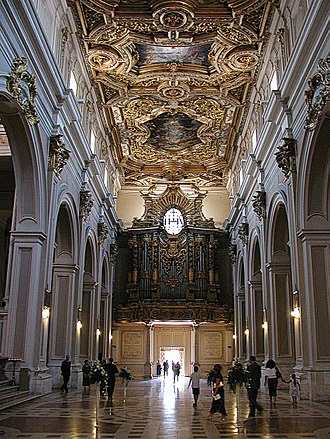

Cathedral Basilica of St. Panfilo of Sulmona, Sulmona, L’Aquila

Declared a minor basilica by Pope Pius VII in 1818.

The basilica is the cathedral of the Diocese of Sulmona-Valva.  A Roman temple was once on this site, followed by a church.  The current church was completed in 1119 and is dedicated to an early bishop.  Portions of the crypt date to the 10th Century.  The church uses several styles—Romanesque, Gothic, and Baroque—often because restorations have been needed after earthquakes.


All pictures are from Wikipedia.


Basilica of St. Mary of the Assumption, Castel di Sangro, L’Aquila

Declared a minor basilica by Pope Pius IX in 1856.

The Baroque church was built between 1695 and 1725 to replace an earlier church destroyed by an earthquake.  It has many works of art.


All pictures are from Wikipedia.
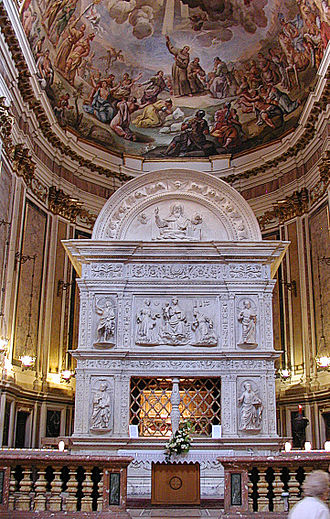

Co-Cathedral Basilica of St. Thomas the Apostle, Ortona, Chieti

Declared a minor basilica by Pope Pius IX in 1859.

The basilica is the co-cathedral for the Archdiocese of Lanciano-Ortona.  The Gothic and Baroque church was built in 1127 but has been damaged many times by war and weather but has been restored many times as well.  Since 1258, it has contained significant relics of St. Thomas the Apostle (portions of the Apostle’s body are also in India).


The first two pictures are from local sources and the others are from Wikipedia.


Cathedral Basilica of Our Lady of the Bridge, Lanciano, Chieti

Declared a minor basilica by Pope Pius X in 1909.

The basilica is the cathedral for the Archdiocese of Lanciano-Ortona.  There was a Roman bridge on this site and a statue of the Madonna and Child was found there in 1088—it likely dated to the 8th Century.  In the 14th Century, a church was built on top of the bridge.  The church was almost entirely rebuilt in the 18th Century using Neoclassical and Baroque styles. The river that once flowed under the bridge was diverted in the early 20th Century.


All pictures are from Wikipedia.


Basilica Shrine of St. Gabriel of the Sorrowful Virgin, Isola del Gran Sasso, Teramo

Declared a minor basilica by Pope Pius XI in 1929.

St. Francis of Assisi established a convent for his Order in 1215 and attached it to an existing church.  The Franciscans left in 1809 due to Napoleonic suppression.  The Passionists took over the convent in 1847.  St. Gabriel was among the Passionists and he died in 1862 at the age of 23.  The complex today consists of the “ancient” church (which is the Basilica), the convent, and a modern church (2014) in which St. Gabriel is buried.


All pictures are from Wikipedia.


Basilica of St. Bernardine of Siena, L’Aquila, L’Aquila

Declared a minor basilica by Pope Pius XII in 1946.

Although St. Bernardine is mostly associated with Siena, he died and is buried in L’Aquila.  He died in 1444 and was canonized in 1450.  This church was built between 1454 and 1472 to house his remains.  The façade was built in a Renaissance style and the interior was rebuilt in a Baroque style following a 1703 earthquake.  The wood ceiling is adorned with pure gold.  The Basilica was further damaged by a 2009 earthquake but has been restored.


All pictures are from Wikipedia.